




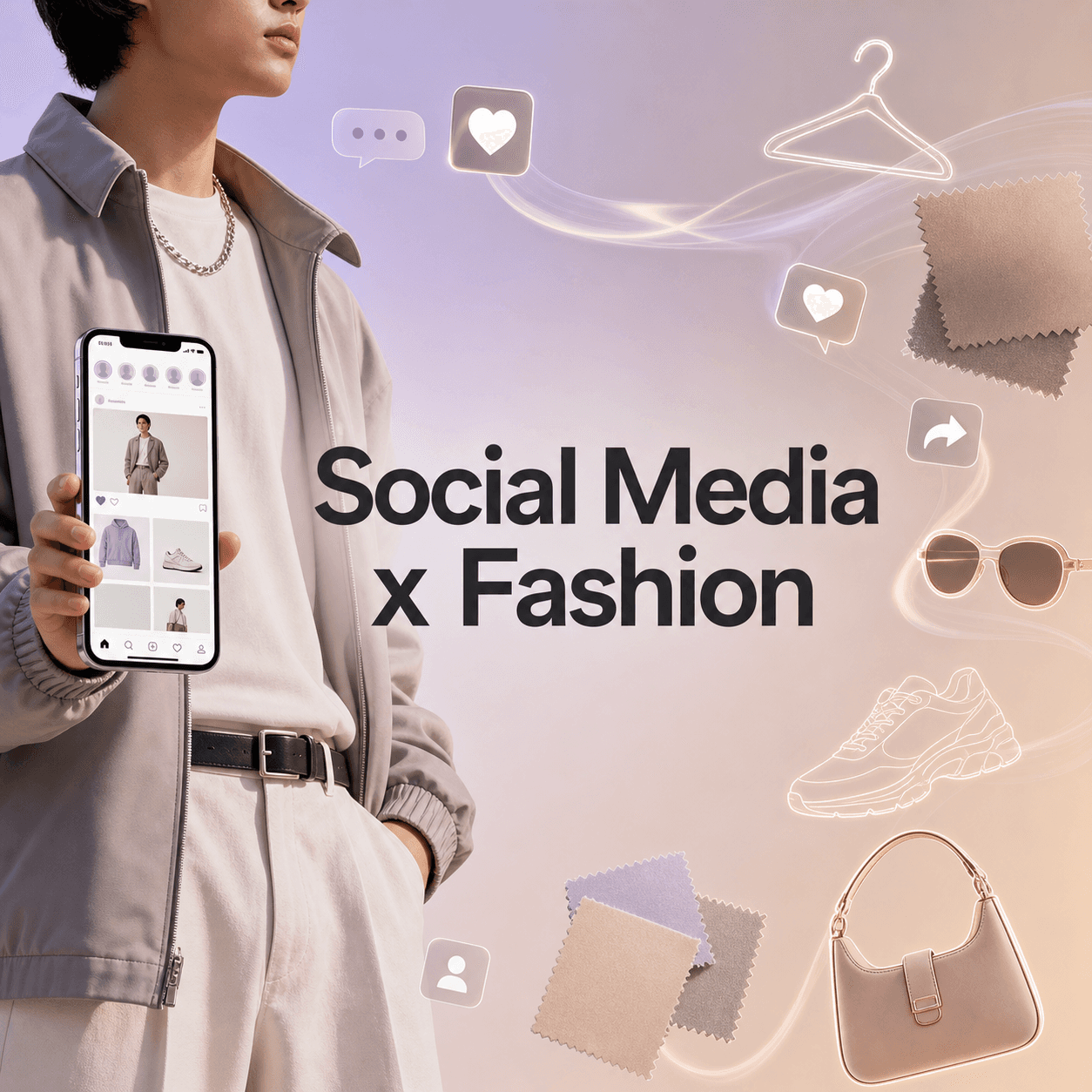
I used to think I was pretty immune to fashion trends.
Like, sure, I noticed them. But I honestly believed I was making my own choices. Then one day I bought a pair of sneakers I did not need, in a color I never wear, because I saw three different people style them in three different Reels. That was the moment it clicked.
Social media does not just show us fashion. It quietly teaches us what looks normal, what looks cool, what looks “current”. And once something starts to feel normal, buying it starts to feel… reasonable. Even inevitable.
This is not a doom post about TikTok ruining personal style. Social media has done some genuinely good things for fashion too. But it has absolutely changed how we choose outfits, what we consider stylish, and how fast trends rise and die.
Let’s get into it.
Social media turned fashion into a feed, not a season
Fashion trends used to arrive in waves.
Runway, magazine, store racks, then you’d see it on people in your city. A slow drip. Now it is a firehose. You open Instagram on Monday and suddenly everyone is wearing a “tomato girl” outfit or ballet flats or a specific shade of grey that has a weird name like “oyster mist”.
And the thing is, social platforms are designed to reward repetition.
When you see the same silhouette ten times in a row, your brain starts treating it like a safe choice. It becomes the default. Even if you do not consciously decide anything, you start drifting toward that look. That’s influence. Not a direct command. More like gravity.
Also, the cycle is faster now. Trends get compressed into micro trends.
Aesthetics are basically packaged like little starter kits. You can buy your way into a vibe in two clicks. And then, three weeks later, the algorithm moves on and the vibe is “over”. That part is new, and it has real consequences for how we shop.
The algorithm is the new stylist
This is the part people underestimate.
We think we are following people. But really, we are being fed a stream. The algorithm decides what you see more of, what gets repeated, what becomes familiar, what becomes aspirational.
Watch two outfit videos with wide leg jeans and suddenly your Explore page is basically a denim catalog. Then it starts nudging you toward tops that match those jeans. Then shoes. Then bags. Then “capsule wardrobe essentials” videos. It feels like you discovered a look. But the look was also delivered to you in a very specific order.
And because the algorithm learns what holds your attention, it often pushes extremes.
More dramatic silhouettes. More bold styling. More “you need this” energy. Subtle, timeless, personal style content exists, sure. But it does not always perform as well as a sharp before and after, or a transformation, or a “run don’t walk” recommendation. Platforms reward what gets clicks.
So fashion choices start to shift toward what performs on camera, not what works in real life.
Which is… kind of a big deal.
Influencers changed what “fashion authority” looks like
The fashion gatekeepers used to be pretty obvious.
Editors, designers, celebrities, stylists. Now it can be a 19 year old with good lighting and a strong point of view. And honestly, sometimes that is refreshing. It opened the door for different body types, different aesthetics, different cultural influences. It made fashion feel less locked behind a velvet rope.
But influencer culture also changes how people trust recommendations.
When someone you follow posts outfits every day, you develop a relationship with their taste. Even if you know it is sponsored, you still absorb it. “If it looks good on them, it might look good on me.” That’s natural.
And then there is the affiliate link economy.
A lot of fashion content is built around selling. Not in an evil way, it is just the business model. But it means the outfits you see are often optimized for conversion. It is easier to sell a trending item than a weird personal piece you thrifted five years ago. So what becomes visible is often what is easy to buy right now.
Visibility shapes demand. Demand shapes production. Production shapes what is available.
It is a loop.
Social media makes trends feel personal, even when they are mass
This is one of the smartest tricks social media pulls.
It makes trends feel like identity.
Instead of “everyone is wearing this”, it becomes “I am a clean girl” or “I am a Y2K person” or “I dress coastal grandparent” or whatever the latest aesthetic label is. You are not just buying a skirt. You are buying membership in a vibe.
And it feels personal because the content is personal.
You are seeing someone in their room, in their mirror, talking like a friend. Not a brand ad. Not a magazine spread. So your guard is lower. You do not feel marketed to. You feel inspired.
Which is exactly why it works.
This is not always bad. Sometimes having a label helps people explore. Especially if you never had a style language growing up, or you felt excluded from fashion. Aesthetics can be a starting point.
But they can also become a box.
Once you commit to an identity online, it is weirdly hard to change it. Even if no one is actually judging you, it can feel like they are. So people keep buying within the same aesthetic, even when they are bored. That is influence too, just in a different form.
Fast fashion got turbocharged, then quietly rebranded
Let’s be real, social media and fast fashion grew up together.
The speed of trends on TikTok and Instagram basically requires ultra fast supply chains. Brands that can copy a look and ship it fast win. Brands that need months lose.
And the content itself pushes consumption.
Hauls. Try ons. “What I ordered vs what I got.” Closet tours. Restocking videos. The whole vibe is: more, more, more. Even when creators talk about sustainability, the format still often revolves around buying.
Lately, a lot of this has been rebranded as “dupes”.
Dupes are not new, but social media made them a sport. People hunt for the cheaper version of the thing. And yes, sometimes that helps someone access a look they love. But it also keeps the cycle moving. The point becomes acquiring the item, not understanding why you like it or how you will wear it long term.
You can feel the pressure. Like if you do not buy it now, you missed the moment.
That pressure is a huge driver of fashion choices today.
Fashion became more visual, more performative, more about the shot
This is a weird one because it is subtle.
Social media is a camera first environment. So clothing that looks good in a photo often gets prioritized over clothing that feels good in a day.
You start thinking in frames.
How does this look from the front? What about in a mirror selfie? Does it pop against a neutral wall? Does it photograph well at night? Does it match the aesthetic of my feed?
Even if you are not posting outfits, you are still absorbing the logic. You see outfits as content. And you begin dressing for imagined moments.
It can be fun, honestly. Styling can become a creative hobby. But it can also mess with your relationship to your closet. If an outfit does not feel “postable” it can start to feel like it does not count.
That pushes people toward louder trends, more obvious brand logos, more statement pieces. Things that read instantly on screen.
Meanwhile, truly good clothes, good fabric, good fit, might not go viral. Because it is not as dramatic.
Social media helped democratize fashion, and that part matters
I do not want to pretend the influence is only negative.
Social media has expanded what fashion looks like. And who gets to be seen.
People with different body types posting real outfits. Hijabi fashion creators showing styling that mainstream magazines ignored for years. Older creators proving style does not expire at 30. Men experimenting with silhouettes outside the boring defaults. Thrifters turning secondhand into something cooler than what’s in stores. Disabled creators talking about adaptive fashion needs. All of that changed the conversation.
Also, fashion inspiration is easier now.
If you have a wedding to attend and no clue what to wear, you can search for “guest outfit ideas” and get a hundred options. If you are trying to dress for a new job, you can find people with your body type and see what actually works. That is useful. It’s not trivial.
Social media also gave rise to smaller brands.
A good product can blow up from one video. Independent designers can build audiences. Vintage sellers can find buyers. That is real.
So yes, the influence is complicated. It is not just mindless trend chasing.
The pressure to keep up is real, and it hits confidence
Here is the emotional part.
When you are constantly seeing polished outfits, you start comparing. Not just your clothes. Your body. Your lifestyle. Your ability to afford things. Your “taste”.
Even when creators are being authentic, the feed is still curated. The best lighting, the best angle, the best outfit from the week. And the algorithm tends to elevate people who already match certain beauty standards. That is changing slowly, but not fast enough.
So fashion choices become less about self expression and more about self correction.
Buying a new top because you want it is one thing. Buying it because you feel behind is another. A lot of people are making purchases from that second place without realizing it.
And when you are choosing outfits from insecurity, it usually does not end well. You buy more. You wear less. You feel worse.
So what do you do with all this? A few grounded ways to take back control
You do not have to delete every app and move to a cabin. Unless you want to. But if you want social media to inspire you without controlling you, here are some simple shifts that actually help.
1. Notice what makes you want to buy, not just what you like
Sometimes you love an outfit. Sometimes you love the person wearing it. Sometimes you love the setting, the body, the confidence, the editing. Those are different things. If you can separate them, you shop better.
2. Save outfits, not links
Try saving styling ideas instead of product links. Then recreate the vibe using what you already own, or secondhand. This breaks the immediate buy loop.
3. Follow more variety, on purpose
If your feed is all one aesthetic, the pressure to match it gets intense. Mix it up. Follow different ages, different budgets, different body types, different cultures, different styling philosophies. Your brain needs options.
4. Wait three days before buying the “viral” thing
This sounds basic, but it works. Trends rely on urgency. If you still want it after a few days, you probably actually want it.
5. Build a personal uniform, then use trends as accents
If you know your basics, your colors, your preferred silhouettes, trends become optional. You can play without losing yourself. That is the sweet spot.
The bottom line
Social media influences fashion choices because it influences what we see repeatedly, what we consider attractive, what we believe is normal, and what we think will earn approval. Sometimes that pushes people into fun experimentation and better self expression. Sometimes it pushes people into compulsive shopping and constant dissatisfaction.
Both can be true.
The goal is not to avoid influence completely. That is impossible. The goal is to notice it while it is happening, so you can decide what you actually want. Not what the feed wants.
And yeah, you might still buy the sneakers.
Just make sure you will wear them when the algorithm forgets they exist.
FAQs (Frequently Asked Questions)
How has social media changed the way we experience fashion trends?
Social media has transformed fashion from slow-moving seasonal waves into a rapid-fire feed of micro trends. Platforms like Instagram and TikTok reward repetition, making certain looks feel normal and safe choices quickly. This accelerates trend cycles and influences how people shop and style themselves.
What role does the algorithm play in shaping our fashion choices?
The algorithm acts as a new stylist by curating a personalized stream of content based on what holds your attention. It nudges you toward specific styles, often pushing bold and dramatic looks that perform well on camera, influencing fashion choices subtly but powerfully.
In what ways have influencers changed the concept of fashion authority?
Influencers, including everyday individuals with strong points of view, have democratized fashion authority beyond traditional gatekeepers like editors and designers. While this inclusivity is refreshing, influencer culture also drives trust in sponsored content and affiliate-linked outfits optimized for sales, shaping visibility and demand.
How does social media make fashion trends feel personal even though they are mass-produced?
Social media frames trends as personal identities through aesthetic labels like ‘clean girl’ or ‘coastal grandparent,’ creating a sense of membership in a vibe. Content feels intimate—like advice from a friend—lowering guards and inspiring purchases. However, this can box people into specific styles even when they want to change.
What impact has social media had on fast fashion brands?
Social media’s rapid trend cycles have turbocharged fast fashion by requiring ultra-fast supply chains to keep up with viral looks. Brands that can quickly replicate and ship trendy items succeed, while slower brands fall behind. Content formats like hauls further encourage consumption, fueling fast fashion growth.
Is social media’s influence on personal style entirely negative?
Not at all. While social media accelerates trend cycles and influences buying habits, it also brings positive changes such as increased diversity in body types and aesthetics, accessibility to different cultural influences, and democratization of fashion authority. It offers inspiration and starting points for those developing their style language.