





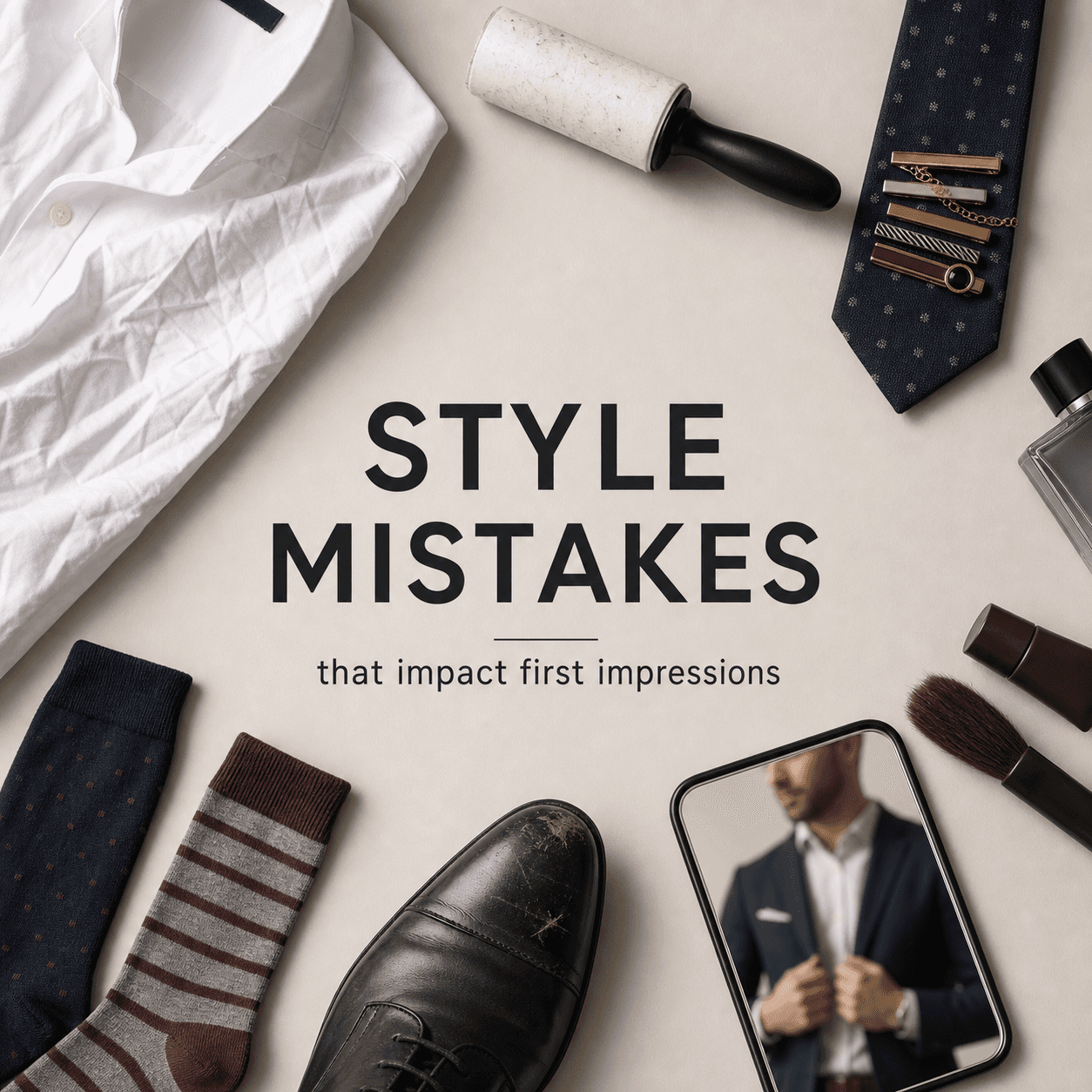



First impressions are weird.
Sometimes it is your resume. Sometimes it is your handshake. Sometimes it is literally just the way your shirt sits on your shoulders, or the fact that your shoes look tired. And the annoying part is, people notice this stuff fast. Like, before you even say anything.
This is not about being rich or having “perfect” fashion sense. It is about avoiding a few style mistakes that quietly scream the wrong message. The kind you do not realize you are sending.
So yeah. Let’s talk about the common ones.
1. Wearing clothes that do not fit. Either way
This is the big one. And it hits everyone, regardless of budget.
- Too big: you look like you borrowed the outfit. It makes you seem smaller, less put together, like you did not check the mirror.
- Too tight: it looks uncomfortable. Like you are trying too hard. Also, it can make even a nice outfit look cheap.
Fit is the first thing the eye registers. Not the brand. Not the color. Fit.
A quick self check that works: if you can pinch a handful of extra fabric in the waist, it is probably too big. If buttons pull or fabric strains across the chest or hips, it is too small. Simple.
If you only fix one thing after reading this, fix fit.
2. Ignoring your shoes (and thinking nobody cares)
People notice shoes constantly. They might not say it, but they clock it.
Dirty sneakers with a nice outfit. Scuffed dress shoes at an interview. Sandals that look like they survived a war. It does not mean you have to own ten pairs. It means the pair you wear should look intentional and clean.
Even casual shoes can look sharp if they are:
- wiped down
- not falling apart
- not visibly stained
- not flattened to death in the heel
If your shoes look neglected, the impression becomes: you probably neglect details in general.
That might be unfair. But it is real.
3. Wrinkled clothes that look like you slept in them
Wrinkles are sneaky. You might not notice them until you are already out, meeting people, and committed to your day.
Unfortunately, wrinkled clothes instantly translate to: rushed, messy, disorganized, even if you are none of those things.
You do not need to be someone who irons everything. But you do need a system. There are a few low effort fixes that can help:
- Hang shirts properly after drying
- Steam outfits while you shower (even a cheap handheld steamer helps)
- Toss wrinkled items in the dryer for 10 minutes with a damp cloth
Crispness reads as competence. Wrinkles read as chaos. That is basically the whole thing.
4. Wearing too many loud pieces at once
Statement pieces are fun. But a common mistake is stacking them.
Loud shirt plus loud shoes plus big watch plus heavy fragrance plus flashy sunglasses. Suddenly you are not “stylish.” You are visually noisy.
A good rule if you are unsure: one statement at a time.
Let one thing do the talking. Everything else supports it. Otherwise people remember the outfit as a blur, not you as a person.
And if your goal is a strong first impression, being memorable for the wrong reason is… not ideal.
5. The “almost clean” problem
This one is brutal because you think you are fine.
It is the shirt that is technically clean but has:
- faint deodorant marks
- a small collar stain
- a tiny food spot
- pet hair that shows in sunlight
- fabric pilling around the waist or underarms
Under indoor lighting you look fine. Then you step outside and it is like, oh no.
First impressions happen in real life lighting, not your bedroom mirror lighting.
So do quick checks in better light. And keep a lint roller around; it is not glamorous but it saves you.
Also, consider investing in the best clothes care tools to maintain your wardrobe better and avoid such mishaps in the future.
6. Bad grooming that clashes with your outfit
You can wear a great outfit and still look off if grooming is neglected.
This is not about being perfectly groomed. It is about obvious mismatches, like:
- polished outfit, messy hair
- formal look, untrimmed beard lines
- nice clothes, cracked lips
- good fit, dirty nails
People read this as inconsistency. Like you can get it right, but you did not finish the job.
If you want an easy grooming baseline for first impressions:
- hair looks intentionally styled, not accidental
- nails clean
- skin not shiny from oil or dryness
- breath handled
It is basic. But basics are what people notice first.
7. Overdoing fragrance (or ignoring it completely)
Smell is part of style, whether you like it or not.
The mistake is usually too much. A strong scent enters the room before you do, and then people are thinking about that instead of listening to you.
The other mistake is not paying attention to odor at all. Smoke, sweat, old laundry smell, heavy food smell. You might be used to it. Other people are not.
A simple approach:
- clean clothes
- deodorant
- if you wear fragrance, keep it close to the body. One to two sprays max
You want someone to notice it only if they are near you. Not from across the room.
8. Wearing the wrong level of formality
This one can sabotage you even if everything technically looks good.
If you are underdressed, you look like you did not care. If you are overdressed, you look like you did not understand the room.
And yes, sometimes overdressing is better than underdressing, but it depends on the situation. A wedding, a networking event, a first date, a job interview. Different expectations.
If you are unsure, aim slightly above average for that environment. You want to look like you respect the moment, without making it all about you.
Also, pay attention to the details that shift formality fast:
- shoes
- belt
- jacket structure
- fabrics (linen reads casual, polished wool reads more formal)
- accessories
You can adjust quickly with just one or two swaps.
9. Cheap looking accessories that try too hard
Accessories can elevate an outfit. Or they can tank it.
The common offenders:
- oversized logo belts
- fake luxury signals
- jewelry that looks like it will turn your skin green
- overly flashy watches that do not match your vibe
- sunglasses that fit poorly
Here is the thing. Accessories sit closer to the face and hands, so people notice them more. If they look cheap or loud, the whole look gets dragged down with them.
If you want an easy, safe approach:
- fewer accessories, better quality
- simple shapes
- metals that match (or at least do not fight)
- sunglasses that actually fit your face
And if you are not sure, skip it. A clean outfit with no accessories usually beats a decent outfit with distracting ones.
10. Wearing clothes that are “you” from five years ago
This one is a little personal, but it is real.
A lot of people get stuck in a style era. They keep wearing what they wore in college. Or what they wore at their first job. Or what worked when they were a different weight, different lifestyle, different identity.
And it creates a subtle disconnect. Like the outfit is not caught up to who you are now.
You do not need a total reinvention. Just update one thing at a time:
- swap worn out basics
- upgrade fit
- modernize shoes
- replace dated silhouettes
- simplify colors if you are overwhelmed
Your style should look current on you. Not like you are trying to recreate an old version of yourself.
11. Wearing too many items that look worn out
There is “vintage” and then there is “tired.”
Faded black shirts. Collars that curl. Jeans with thinning knees. Bags with peeling leather. Hoodies that lost their shape. You get the idea.
One worn out item can be fine if it feels intentional. But when several pieces look aged, the impression becomes: you do not maintain your things.
And again, this is not about money. Maintenance is usually cheaper than replacement.
A helpful closet check:
- if you would not buy it again today, it probably needs to go
- if it looks worse than it feels, it is not serving you anymore
- if it is stained, stretched, or misshapen, it is not a “casual vibe,” it is just worn
12. Forgetting the power of color harmony
Color matters more than people want to admit.
Clashing colors can look chaotic. Too many tones can look accidental. And weirdly, even expensive clothing looks off if the colors fight each other.
This does not mean you need to dress in neutrals only. But for first impressions, harmony wins.
An easy formula if you do not want to think too hard:
- base outfit in neutrals (black, navy, gray, white, beige, olive)
- add one color accent
Or go monochrome. Monochrome is underrated. It makes you look taller, cleaner, calmer.
Also, watch the undertones. Some people look better in warm tones, some in cool. If a color makes you look tired or washed out, it is not your color, even if you like it.
13. Looking uncomfortable in what you are wearing
This is the sneakiest mistake because it is not the outfit. It is your energy.
If you are constantly adjusting your shirt, pulling down your skirt, fiddling with sleeves, tugging at your collar, or walking carefully because your shoes hurt, people pick up on it.
Discomfort reads as insecurity, even when it is just a bad waistband.
So when you are choosing what to wear for an important first impression, ask:
- Can I move normally in this?
- Can I sit, stand, walk without fixing it every minute?
- Will I be thinking about my outfit, or focusing on the conversation?
Comfort is not “giving up.” It is part of looking confident.
A quick checklist before you walk out the door
This takes 30 seconds and it catches most first impression style problems.
- Fit check: shoulders, waist, length.
- Wrinkle check: chest, stomach, sleeves.
- Shoe check: clean, not beat up.
- Lint check: shoulders, back, dark fabrics.
- Grooming check: hair, nails, breath.
- Final mirror: do you look intentional?
If the answer is yes, you are already ahead of most people.
Let’s wrap it up
First impressions are fast. And style is one of the fastest signals you send, whether you want it to be or not.
The good news is, you do not need a huge wardrobe or a total makeover. Most instant impression killers are small, fixable things. Fit. Shoes. Wrinkles. Cleanliness. The basics.
Handle those, and suddenly your clothes stop being a distraction. People see you. They listen. And you walk into rooms feeling like you belong there.
That is the whole point.
FAQs (Frequently Asked Questions)
Why is fit so important when choosing clothes for a first impression?
Fit is the first thing people notice before brand or color. Clothes that are too big make you look smaller and less put together, while clothes that are too tight appear uncomfortable and cheapen your outfit. Ensuring your clothes fit properly sends the right message and enhances your overall appearance.
How do shoes affect the impression I make?
People often notice your shoes even if they don’t mention it. Dirty, scuffed, or worn-out shoes can suggest neglecting details in general, which might unfairly impact how others perceive you. Wearing clean, intentional, and well-maintained shoes complements your outfit and shows attention to detail.
What are simple ways to avoid wearing wrinkled clothes?
Wrinkled clothes can make you appear rushed or disorganized. To avoid this, hang shirts properly after drying, use a handheld steamer or steam clothes while showering, and toss wrinkled items in the dryer for about 10 minutes with a damp cloth. These low-effort fixes keep your clothes crisp and presentable.
How can I balance statement pieces without looking visually noisy?
Wearing multiple loud or statement pieces at once can be overwhelming and distract from your personal presence. A good rule is to choose one statement piece at a time and let everything else support it subtly. This approach creates a stylish yet balanced look that leaves a strong first impression for the right reasons.
What is the “almost clean” problem in clothing, and how can I prevent it?
The “almost clean” problem refers to wearing clothes that look fine indoors but have faint deodorant marks, small stains, pet hair, or fabric pilling visible in natural light. To prevent this, perform quick checks in better lighting before leaving home, use a lint roller regularly, and invest in quality clothes care tools to maintain your wardrobe’s appearance.
Why is grooming important alongside dressing well for making a good first impression?
Good grooming complements your outfit by creating consistency. Neglected grooming—such as messy hair with a polished outfit or dirty nails with well-fitted clothes—sends mixed signals. Basic grooming like styled hair, clean nails, balanced skin condition, and fresh breath ensures you look intentionally put together and boost your overall style impact.