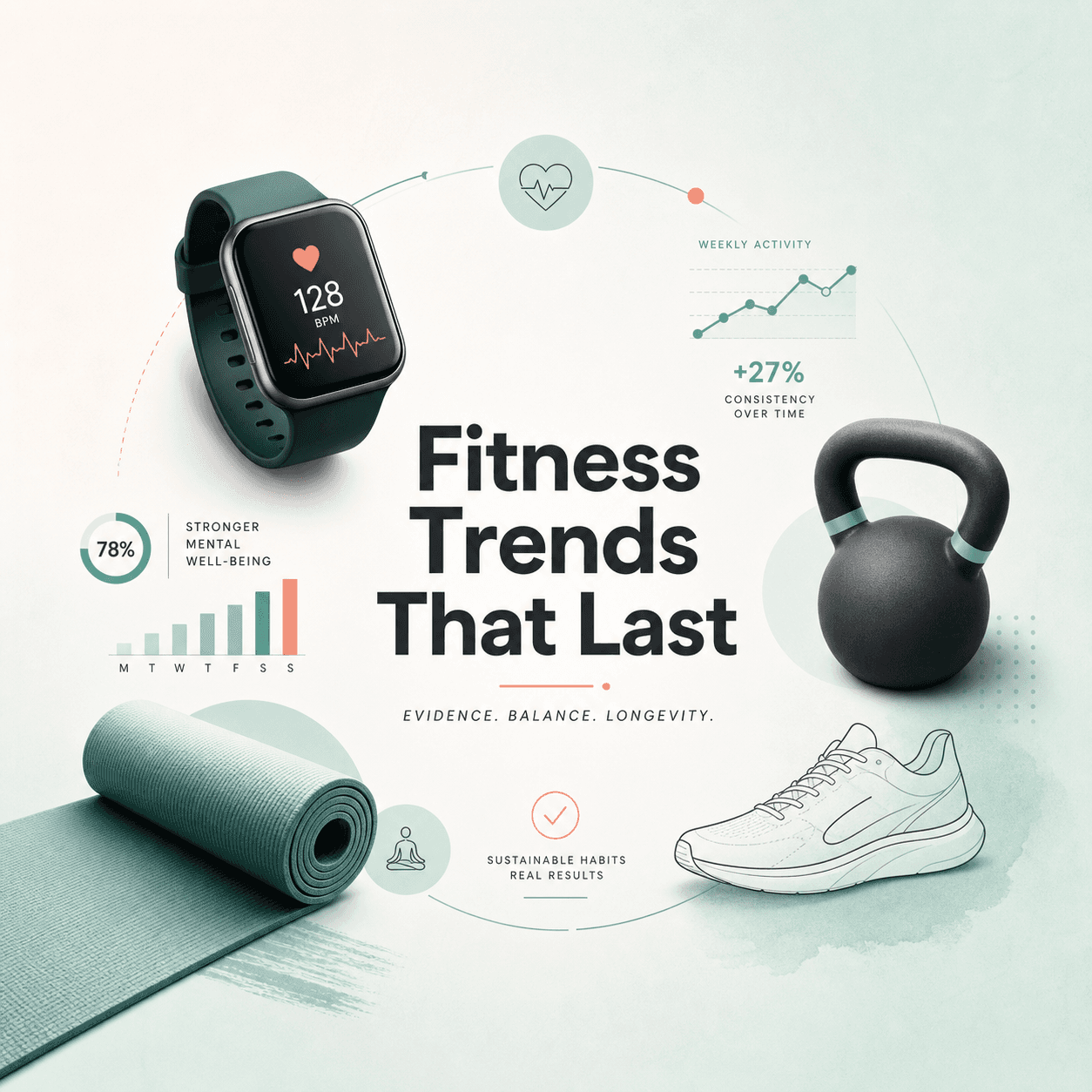









Fitness trends come and go, and honestly, some of them deserve to.
Every year there’s a new shiny thing that promises faster fat loss, perfect abs in 10 minutes, or some weird blend of dance, resistance bands, and motivational shouting. And yeah, it can be fun. It can also be exhausting if you feel like you have to keep up.
But underneath all that noise, there are a few trends that actually feel… stable. Like they’re built on things that work. Things coaches, physical therapists, and strength professionals have been repeating for decades, just packaged in a more modern way.
So that’s what this is.
Not “what’s hot on TikTok this week”. More like, what’s sticking around because it genuinely helps people move better, get stronger, avoid injury, and keep showing up.
1. Strength training for everyone, not just “gym people”
This one is no longer niche, and it’s about time.
Strength training used to be treated like a separate category. Like cardio was for health, and lifting weights was for bodybuilders. Now it’s increasingly seen as basic self maintenance. Not optional. Especially as you get older.
Experts keep pushing this because the benefits hit everything at once:
- More lean muscle and better body composition
- Stronger bones and joint support
- Better insulin sensitivity and metabolic health
- More confidence, frankly
- A lower chance of getting wrecked by normal life stuff. Carrying groceries, moving furniture, picking up your kid, all that
And the “trend” part is that it’s getting more accessible. More beginner friendly programs. More women lifting heavy without apology. More older adults learning deadlifts and squats with good coaching, not ego.
Also, people are realizing strength training doesn’t have to mean living inside a gym. Dumbbells at home. Resistance bands. A pull up bar. Two kettlebells and a plan. That’s enough.
2. Walking as real exercise (and not as a consolation prize)
For a while, walking was treated like what you do when you don’t do “real workouts”.
Now, experts talk about it like it’s one of the most sustainable forms of cardio you can do. Because it is.
Walking is low impact, easy to recover from, and it doesn’t spike your appetite the way some intense cardio can. It fits into daily life. You can do it with a friend. You can do it while listening to something. It’s not complicated.
And when people actually track it, steps add up fast. A consistent walking habit can improve:
- Cardiovascular health
- Blood sugar management
- Mood and stress levels
- Sleep quality
- General daily energy
The trend here is the shift in attitude. People are proudly building routines around walking. Incline treadmill walks. Outdoor long walks. “After meal walks”. It’s practical. It works. It’s probably not going anywhere.
3. Functional training that actually means something
Functional training is one of those phrases that got a little ruined by marketing.
But the real version of it. The version experts like. That’s absolutely sticking.
Functional training, when done well, means training movement patterns that carry into life and sport. Hinges, squats, carries, pushes, pulls, rotation, bracing. It usually includes unilateral work too. Single leg strength, stability, balance.
This is the stuff that makes you feel capable.
Not just “I burned 500 calories” capable. More like, “my back doesn’t hurt when I travel” capable.
Expect to see more programs built around:
- Loaded carries (farmer carries, suitcase carries)
- Single leg work (split squats, step ups, lunges)
- Core training that includes anti rotation and anti extension, not just crunches
- Mobility work paired with strength, not separate from it
Experts like it because it’s adaptable. You can scale it for beginners, athletes, older adults, anyone. And it keeps people training longer because they feel better, not just sore.
4. Zone 2 cardio and the rise of “less intense, more consistent”
Not everyone needs to do HIIT four times a week. In fact, many people shouldn’t.
A trend that keeps getting louder is Zone 2 cardio. That moderate intensity pace where you can still talk, maybe in short sentences, and you can keep going for a while. Think cycling, brisk walking, rowing, easy jogging, incline treadmill, whatever you can sustain.
Experts like this because it builds an aerobic base with less wear and tear. It supports heart health, endurance, recovery, and overall fitness capacity. Plus, people are more likely to do it consistently because it doesn’t feel like punishment.
HIIT is not dead. It’s just not being pushed as the default answer anymore.
And that’s a good thing.
5. Mobility, but paired with strength (finally)
Mobility is another area where people went extreme. Some folks were doing 45 minute mobility flows, every day, forever, and still couldn’t squat without pain.
What experts actually want is mobility that supports strength. And strength that locks in mobility.
So instead of endless stretching, you’re seeing more:
- Controlled range strength exercises
- Slow eccentrics
- Pauses at end range
- Loaded mobility drills
- Warmups that look like mini movement practice sessions
This tends to work better because your body learns it can own the position, not just briefly reach it.
And as more people get into lifting, mobility becomes less of a trendy add on and more of a necessity. Shoulders, hips, ankles, thoracic spine. If you train for years, you have to take care of those areas or you’ll hit a wall.
6. Personalized training based on data, but not obsessed with data
Wearables are everywhere now. Heart rate, sleep tracking, HRV, step counts, recovery scores. Some people use it well. Some people get completely neurotic about it.
The version experts believe will last is the balanced version.
Using data as feedback, not as a dictator.
For example:
- If your sleep has been trash all week, maybe don’t max out your deadlift today
- If your resting heart rate is way up, consider a lighter session or a walk
- If your step count is low, add a short walk after lunch
- If your heart rate stays too high during “easy” cardio, you might need to slow down and build your base
It becomes a tool for smarter decisions, not a reason to panic.
The trend that will stick is personalization. Training plans that adjust based on your schedule, stress, recovery, and preferences. People are done with one size fits all programs that ignore real life.
7. Protein and fiber becoming mainstream, simple nutrition priorities
Nutrition trends are chaotic. Always have been.
But the basics are getting more attention, and experts love that. Two big ones that keep showing up: protein and fiber.
Protein because it supports muscle retention, satiety, recovery, and strength gains. Especially important if you’re dieting, aging, or training regularly.
Fiber because it supports gut health, blood sugar regulation, and fullness. It also tends to force you into eating more whole foods without someone yelling at you to “eat clean”.
And importantly, this isn’t framed as a weird diet identity. It’s more like, “Hey, can you get 25 to 35 grams of fiber most days?” and “Can you get a solid protein source at each meal?”
Not flashy. Not dramatic. Sustainable.
8. At home training that doesn’t feel like a downgrade
At home workouts used to be the backup plan.
Now, they’re a real lane. And experts think this will keep expanding because the barrier to entry is low and the adherence can be higher. No commute. Less intimidation. More consistency.
What changed is quality.
People are learning how to do effective home training with progressive overload. They’re investing in adjustable dumbbells, kettlebells, a bench, maybe a cable system. They’re following structured programs, not random “burn” workouts.
Also, hybrid routines are becoming normal. Two days at the gym, two days at home, plus walking. That’s a very realistic setup for a lot of adults with jobs and families.
And it works.
9. Recovery becoming part of training, not something you earn
Recovery used to be talked about like it was for elite athletes.
Now it’s being treated as the thing that allows training to work at all. Because that’s true. Adaptation happens when you recover, not when you grind yourself into the floor.
Experts are big on practical recovery habits:
- Sleep consistency, not perfection
- Enough calories to support your training
- Deload weeks and lighter phases
- Managing stress and overall workload
- Mobility and light movement for circulation
Even concepts like “active recovery” are getting less silly. It’s not a magical fat burning session. It’s just moving in a way that helps you feel better and stay consistent.
You’ll also keep seeing things like sauna, cold plunges, massage guns. Some of it is hype. Some of it is helpful. But the bigger trend is the mindset shift: recovery is training.
10. Group fitness evolving into community, not just classes
Group fitness isn’t new. What’s new is that the best versions of it are leaning hard into community.
Experts like group training because adherence goes up when people feel connected. When you know the coach knows your name. When you’re not just a number. When you have a little social accountability.
But it’s evolving away from pure “sweat entertainment” and toward coaching and progression:
- Small group strength training
- Semi private personal training
- Running clubs that include strength days
- Boutique studios that teach technique, not just intensity
People still want fun. They just also want results and safety.
And honestly, in an era where so many people are isolated, fitness communities are filling a real social gap. That’s not a trend that fades easily.
So what does this mean for you?
If you’re trying to build a routine that lasts, you don’t need to chase novelty. You need a few fundamentals that you can repeat.
Here’s the simplest way to think about the “trends that will last” list:
- Strength train a few times a week
- Walk a lot
- Do some easy cardio you can recover from
- Train mobility through strength, not just stretching
- Eat enough protein and fiber
- Use data lightly, not obsessively
- Pick a routine that fits your life, home or gym or both
- Take recovery seriously
- If you can, find a community you actually enjoy
Most people don’t fail because they picked the wrong workout. They fail because the plan required them to become a different person.
The trends experts believe will last are the ones that let you stay you. Just stronger. Calmer. More capable. And still showing up a year from now.
FAQs (Frequently Asked Questions)
Why is strength training considered essential for everyone, not just gym enthusiasts?
Strength training is no longer a niche activity; it’s recognized as basic self-maintenance beneficial for all ages. It improves lean muscle mass, body composition, bone strength, joint support, insulin sensitivity, metabolic health, confidence, and helps in everyday tasks like carrying groceries or picking up kids. With more accessible beginner-friendly programs and equipment like dumbbells or resistance bands, strength training is becoming inclusive for women and older adults alike.
How has the perception of walking changed in fitness routines?
Walking is now valued as a legitimate form of exercise rather than a consolation prize. It’s low impact, sustainable, easy to recover from, and doesn’t spike appetite like intense cardio. Regular walking improves cardiovascular health, blood sugar management, mood, stress levels, sleep quality, and daily energy. People are building consistent walking habits such as incline treadmill walks or after-meal strolls because it’s practical and effective.
What does functional training truly mean and why is it important?
Functional training focuses on movement patterns that translate into real-life activities and sports—such as hinges, squats, carries, pushes, pulls, rotation, and bracing. It includes unilateral exercises to develop single-leg strength and balance. This approach makes you feel capable in everyday life by preventing pain and injury rather than just burning calories. Programs emphasize loaded carries, single-leg work, core stability with anti-rotation exercises, and mobility paired with strength for adaptability across all fitness levels.
What is Zone 2 cardio and why is it gaining popularity over high-intensity workouts?
Zone 2 cardio refers to moderate-intensity exercise where you can maintain conversation in short sentences while sustaining activity for a long duration—like brisk walking, easy jogging, cycling or rowing. It builds an aerobic base with less wear and tear on the body compared to intense HIIT sessions. This approach supports heart health, endurance, recovery and overall fitness capacity while encouraging consistency because it feels less punishing.
How should mobility training be integrated with strength for better results?
Mobility training works best when paired with strength exercises that reinforce control at end ranges of motion instead of just passive stretching. Techniques include controlled range strength exercises, slow eccentrics, pauses at range limits, loaded mobility drills and warmups mimicking movement practice sessions. This method teaches your body to maintain positions actively which reduces pain during movements like squats and supports long-term joint health especially in shoulders, hips, ankles and thoracic spine.
Are these fitness trends temporary fads or sustainable practices?
Unlike fleeting trends promising quick fixes or gimmicks popularized on social media platforms like TikTok, these fitness approaches are built on decades of expert advice from coaches and physical therapists. They focus on improving movement quality, strength development, injury prevention and consistent participation. Because they deliver genuine benefits across age groups and fitness levels while being adaptable and accessible outside traditional gyms—these trends are here to stay.