





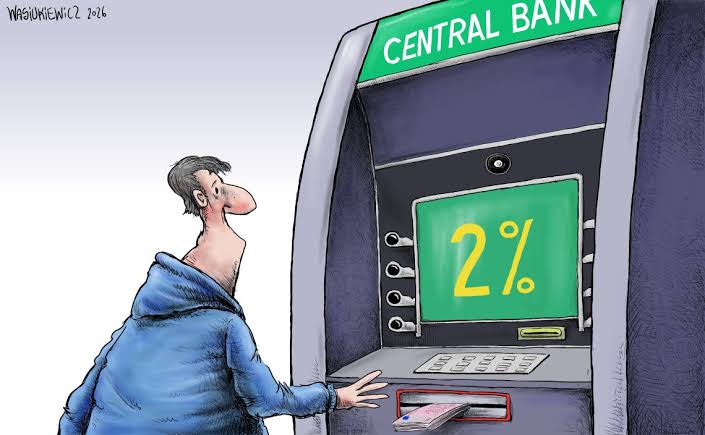




Policymakers must decide whether to fight persistent inflation with higher interest rates or protect economic growth by keeping borrowing costs stable.
The world economy has entered an uncomfortable period in which inflation is too high for central banks to relax but growth is too fragile for them to tighten policy without risk.
US consumer inflation was reported at approximately 3.5% in June, remaining above the Federal Reserve’s 2% objective. At the same time, uncertainty surrounding energy supplies through the Strait of Hormuz has introduced the possibility of another increase in fuel and transportation costs.
That leaves central bankers facing three imperfect choices: raise interest rates, hold them steady or begin cutting them.
Why central banks may raise rates
Higher interest rates are intended to reduce demand.
When mortgages, credit cards and business loans become more expensive, households and companies generally borrow and spend less. Weaker demand can make it harder for businesses to continue raising prices.
Dallas Federal Reserve President Lorie Logan has argued that US interest rates may need to move modestly higher because inflation is not returning reliably to target. She warned that waiting too long could allow inflation to become embedded, potentially requiring more aggressive action later.
The Fed’s benchmark rate was maintained in a range of 3.50% to 3.75% at its previous meeting. Policymakers are due to meet again on July 28 and 29.
Why raising rates is risky
Interest-rate increases do not affect only inflation.
They also raise financing costs for homebuyers, renters indirectly affected by landlords’ expenses, small businesses and heavily indebted companies. Excessive tightening can weaken hiring, investment and consumer spending.
Central banks also face a difficult distinction between demand-driven inflation and supply-driven inflation.
Higher interest rates can reduce excessive spending. They cannot reopen a shipping lane, produce additional oil or immediately repair supply chains. Raising rates in response to an energy shock may slow the economy without resolving the original shortage.
Why cuts are also difficult
Cutting rates could support economic growth and reduce borrowing costs. However, doing so while inflation remains elevated might stimulate demand at precisely the wrong time.
It could also damage a central bank’s credibility. Once consumers and businesses begin expecting prices to rise persistently, those expectations can influence wage demands, contracts and pricing decisions.
What it means for households
For borrowers, the uncertainty means relief may arrive later than expected.
Mortgage and business-loan rates could remain high, while credit-card balances may continue to be expensive. Savers, by contrast, may continue receiving relatively attractive returns on certain deposits and government securities.
The most important signals will be the direction of energy prices, wage growth, employment and underlying inflation after volatile food and fuel components are removed.
Central banks want to avoid both a renewed inflation surge and an unnecessary recession. The problem is that policies designed to prevent one can increase the risk of the other.
That is why inflation is not simply high or low in 2026. It is suspended in a policy limbo—and every new economic shock makes the eventual exit more difficult.