










Not long ago, “plant based” was basically code for vegetarian. Or vegan. Or that one friend who brought tofu scramble to a brunch potluck and quietly judged the bacon.
Now it’s different.
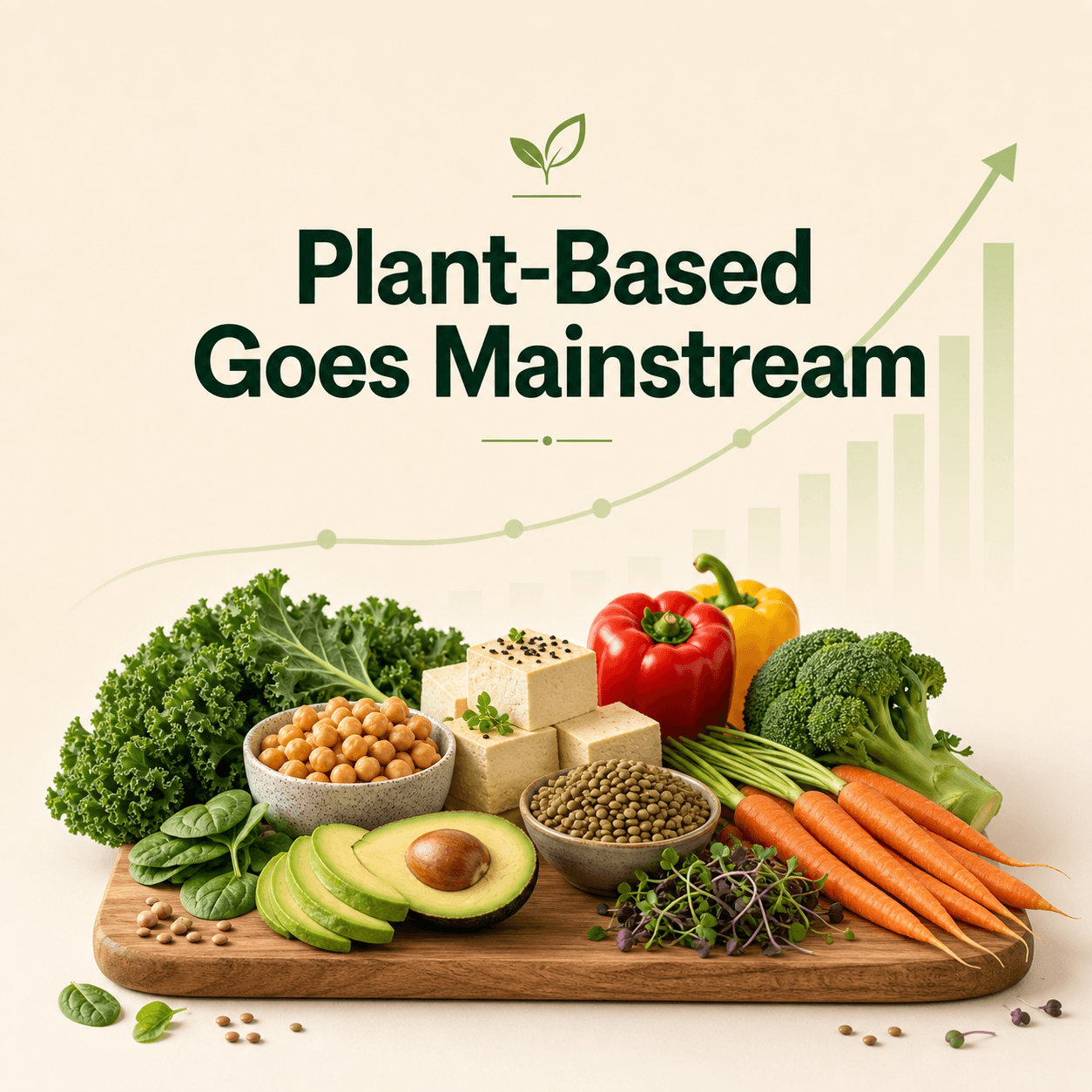
Plant based foods are everywhere, and not just in the carts of people who swear off meat. They’re in office fridges next to leftover chicken. They’re in fast food bags on the passenger seat. They’re in school lunches, hospital cafeterias, gas station coolers, and honestly, in a lot of homes where nobody is making a moral statement. People are just eating them.
And that shift matters. Because it means plant based food is turning into a default option, not a niche identity. It’s less “this is who I am” and more “yeah I grabbed the oat milk, it tastes good.”
So what happened? Why are plant based foods rising so fast outside vegetarian diets?
Let’s get into it.
Plant-Based Is No Longer a Label, It’s a Category
This is the first big change. “Plant based” used to feel like a dietary philosophy. Now it’s a product category like gluten free or low sugar, something you can shop without joining a movement.
Walk through a supermarket and it hits you.
Plant based milks got their own section. Not a sad corner. A whole shelf run.
Then there’s plant based yogurt, plant based butter, plant based mayo, plant based protein bars, plant based frozen meals. Plant based “chicken” nuggets right next to regular nuggets. Sometimes they’re literally the same brand.
It’s become normal to toss one plant based item into a regular grocery run without thinking too hard about it. That’s what’s new. The adoption isn’t only coming from vegetarians and vegans. It’s coming from people who still eat meat, just not every meal, or not as much, or not in the same way.
And those people are a big group.
This shift is reflected in recent market research which shows that the demand for plant-based products is skyrocketing across various demographics and consumer segments.
Flexitarians Are Quietly Running the Show
The loudest voices online might be in the vegan vs carnivore debate, but the real market growth is mostly happening in the middle.
Flexitarians. Reducetarians. People who eat meat sometimes, but they’re trying to cut back. Or they just don’t want to cook it at home. Or they feel better when they don’t eat it every day. Or they’re watching cholesterol. Or they’re training for a race. Or they’ve had one too many weird chicken textures and they’re done for the week.
You don’t have to fully switch to drive demand. You just have to swap a few meals.
And swapping is easier than ever because plant based foods aren’t just “vegetables.” They’re replacements for familiar staples. Burgers, sausages, milk, creamer, deli slices, ground meat, even egg alternatives that actually cook like something recognizable.
A flexitarian can keep their normal habits and still cut animal products without having to learn a new cuisine from scratch. This flexitarian approach is a huge reason this trend is spreading beyond vegetarian diets. The friction is lower.
Convenience Is Doing More Than Ideology Ever Did
People like to frame plant based eating as values driven, and yes, for some folks it is. But if we’re being honest, convenience is doing a lot of the heavy lifting.
The modern food environment is built around speed.
If you can microwave it, air fry it, toss it into pasta, or add it to a smoothie in 20 seconds, it wins. And plant based brands figured this out. They are not trying to convert you with lectures. They’re trying to win your lunch break.
You can buy plant based ready meals that feel just as easy as frozen pizza. You can order a plant based sandwich without having to ask for ten substitutions. You can pick up a protein shake made with pea protein and not even notice, because it tastes like chocolate anyway.
For a lot of non vegetarians, that’s the entry point. Not a documentary. Not a health scare. Just a product that fits into life.
Taste Got Better. Like, Way Better
This is the part people underestimate. Older plant based food had a reputation, and sometimes it was deserved. Dry veggie burgers. Watery soy milk. Cheese that did not melt, it just sat there looking offended.
But taste has improved a lot. And not just a little.
Food science, better formulations, better seasoning, better textures, better fats, better cooking instructions. Brands learned how to make plant based foods feel indulgent, not “healthy in a sad way.”
Also, people’s expectations shifted. Oat milk didn’t rise because it was the most ethical. It rose because it’s creamy and works in coffee. Same with a lot of plant based swaps. They’re not marketed as punishment. They’re marketed as enjoyable.
Once taste is solid, the barrier disappears. A non vegetarian doesn’t feel like they’re sacrificing. They’re just choosing a different option that still hits the spot.
Health, But Not the Perfect Version of Health
There’s a messy truth here.
People are choosing plant based foods for health reasons, but not always in a strict whole foods way. It’s not all quinoa bowls and kale. Sometimes it’s a plant based burger and fries. Still.
Even with that, the perception is that plant based is lighter, cleaner, easier on digestion, better for heart health, better for long term wellness. And for some swaps, that’s a fair assumption. For others, it’s complicated.
But consumer behavior runs on shortcuts. If someone believes oat milk is better than dairy for their stomach, they buy it. If someone wants more fiber, they buy lentil pasta. If someone is trying to reduce saturated fat, they try plant based spreads. If someone wants protein without “feeling heavy,” they go for tofu, tempeh, beans, pea protein.
And the big one. People are trying to reduce ultra processed meat, not necessarily all meat. Plant based gives them an alternative they can use sometimes.
It’s not perfect health logic. It’s practical health logic. Most people don’t want a total transformation. They want small upgrades that don’t ruin dinner.
Environmental Awareness Went Mainstream
You don’t have to be an activist to notice the world feels. A little unstable lately.
More people connect food choices to environmental impact now, even if they can’t quote stats. They’ve heard enough. About emissions, land use, water, deforestation. It shows up in documentaries, in news cycles, in corporate sustainability reports, in school lessons, in casual conversation.
And plant based foods slot neatly into that awareness.
For a non vegetarian, this often turns into the “I’m not giving up meat, but I’ll eat less of it” mindset. Which again, is the flexitarian effect.
One meatless day a week. Oat milk at home. Plant based lunch. That kind of thing. Small, repeatable choices.
And brands helped by making it easy to feel like you’re doing something good without doing something extreme.
Restaurants Normalized It, Not Health Bloggers
It’s hard to overstate how much restaurants and fast food chains changed the game.
When a major chain offers a plant based option, it tells customers: this is normal enough for the mainstream menu. Not a special request. Not an awkward off menu hack.
Even if someone orders it once out of curiosity, that trial matters. It makes plant based food familiar. And once it’s familiar, it stops being “for other people.”
Also, social dynamics play a role. If a group goes out and one person is vegan, everyone sees the plant based options on the menu. Someone tries a bite. It’s good. Next time, a non vegetarian orders it too. Not because they changed their identity. Just because they liked it.
Restaurants made plant based food part of everyday choice architecture. That’s powerful.
Food Allergies and Intolerances Pushed Adoption Too
Not all plant based growth is about preference. Some of it is necessity.
Lactose intolerance is common, and dairy alternatives have become so good that people don’t feel like they’re missing out. Almond milk, oat milk, soy milk, coconut milk. Dairy free ice cream that’s actually creamy. Plant based creamers that don’t taste weird.
Egg allergies. Dairy sensitivity. People who feel better without certain animal products. Plant based options give them more freedom without cooking everything from scratch.
And when one person in a household needs these swaps, the whole household often eats them too. That’s how plant based foods spread. Not through debates. Through grocery carts.
The Protein Conversation Changed
For years, the loud critique was, “where do you get protein.”
Now, everyone knows protein is everywhere. Or at least they know enough to stop panicking about it.
Plant based protein became a mainstream concept. Pea protein shakes. Soy based products. Seitan. Lentils. Chickpeas. Even high protein pastas and cereals.
Fitness culture played a role here too. Once you see athletes using plant based protein powders, or a gym bro mixing vegan protein into a shaker bottle, the stereotype breaks.
So plant based foods aren’t seen as weak or insufficient. They’re seen as functional. A tool. Another way to hit macros, or feel full, or recover.
That expands the audience well beyond vegetarians.
But There’s Still Confusion. And Some Backlash
This part is important if we’re being realistic.
Not everyone loves the plant based wave. Some people think it’s overhyped. Some don’t like the ingredient lists. Some feel misled by marketing that makes ultra processed food look virtuous just because it’s not meat.
And honestly, those are fair critiques in certain cases.
Plant based does not automatically mean healthy. It doesn’t automatically mean sustainable either. It depends on the product, the ingredients, the sourcing, the processing, the packaging, and what it’s replacing in your diet.
A plant based cookie is still a cookie.
So the future of plant based foods beyond vegetarian diets probably looks more nuanced. Less hero worship. More practical comparison.
People will keep buying plant based foods that taste great, fit their routine, and make them feel good. They’ll skip the ones that feel like expensive science experiments. Brands that win long term will be the ones that don’t rely on buzzwords, and instead make genuinely good food.
What the Future Probably Looks Like
If plant based foods keep rising outside vegetarian diets, it won’t be because everyone turns vegan.
It’ll be because more meals become plant forward by default.
Here’s what that might look like:
- Plant based dairy becomes the standard in coffee shops, with dairy as an option rather than the other way around.
- Hybrid products grow. Think burgers that blend meat and mushrooms, or sausages with plant proteins mixed in. Less extreme, more approachable.
- More whole food plant based convenience. Not just imitation meats, but ready meals built around beans, grains, vegetables, and sauces that actually taste good.
- Better pricing. This is huge. When plant based is consistently more expensive, it stays limited. When it’s competitive, it becomes routine.
- More global influence. A lot of the best plant based meals aren’t “substitutes” at all. They’re just normal dishes from cuisines that already use legumes, tofu, vegetables, and grains in satisfying ways.
And maybe the biggest shift.
People will stop thinking of plant based as a personality.
It’ll just be food.
Wrapping It Up
Plant based foods are rising beyond vegetarian diets because the world changed around them. The products got better. The options got easier. The reasons got broader.
Some people do it for health. Some for the environment. Some because dairy bothers their stomach. Some because it’s convenient. Some because they tried oat milk once and it just worked. And some because they like having options, which is a very normal human thing.
That’s the real story here. Plant based isn’t replacing vegetarianism. It’s expanding beyond it.
Quietly, steadily, meal by meal.
FAQs (Frequently Asked Questions)
What does ‘plant based’ mean in today’s food culture?
Today, ‘plant based’ has evolved from a strict vegetarian or vegan label to a broad product category. It includes a wide range of foods like milks, yogurts, butters, and meat alternatives that are enjoyed by people regardless of their dietary identity.
Why are plant based foods becoming popular among non-vegetarians?
Plant based foods appeal to flexitarians and reducetarians who eat meat occasionally but want to cut back for health, convenience, or personal preference. These foods serve as familiar replacements for traditional staples, making it easy to swap meals without adopting a new cuisine.
How does convenience influence the rise of plant based foods?
Convenience plays a major role in plant based food adoption. Brands offer ready meals, snacks, and drinks that fit seamlessly into busy lifestyles—quick to prepare and easy to enjoy—helping more people include plant based options without extra effort or planning.
Have the taste and quality of plant based foods improved?
Yes, significant advances in food science have enhanced the taste, texture, and overall quality of plant based products. Modern formulations deliver indulgent flavors and satisfying textures that appeal even to non-vegetarians, removing previous barriers related to flavor.
Who are flexitarians and how do they impact the plant based market?
Flexitarians are individuals who primarily eat meat but intentionally reduce their consumption by incorporating more plant based meals. Their growing numbers drive demand for accessible and tasty plant based products that fit easily into mixed diets.
Are health benefits the main reason people choose plant based foods?
While health is a motivating factor for many, the choice isn’t always about strict whole-food diets. People often select plant based options for balanced reasons including taste, convenience, and lifestyle preferences rather than perfect health ideals.