









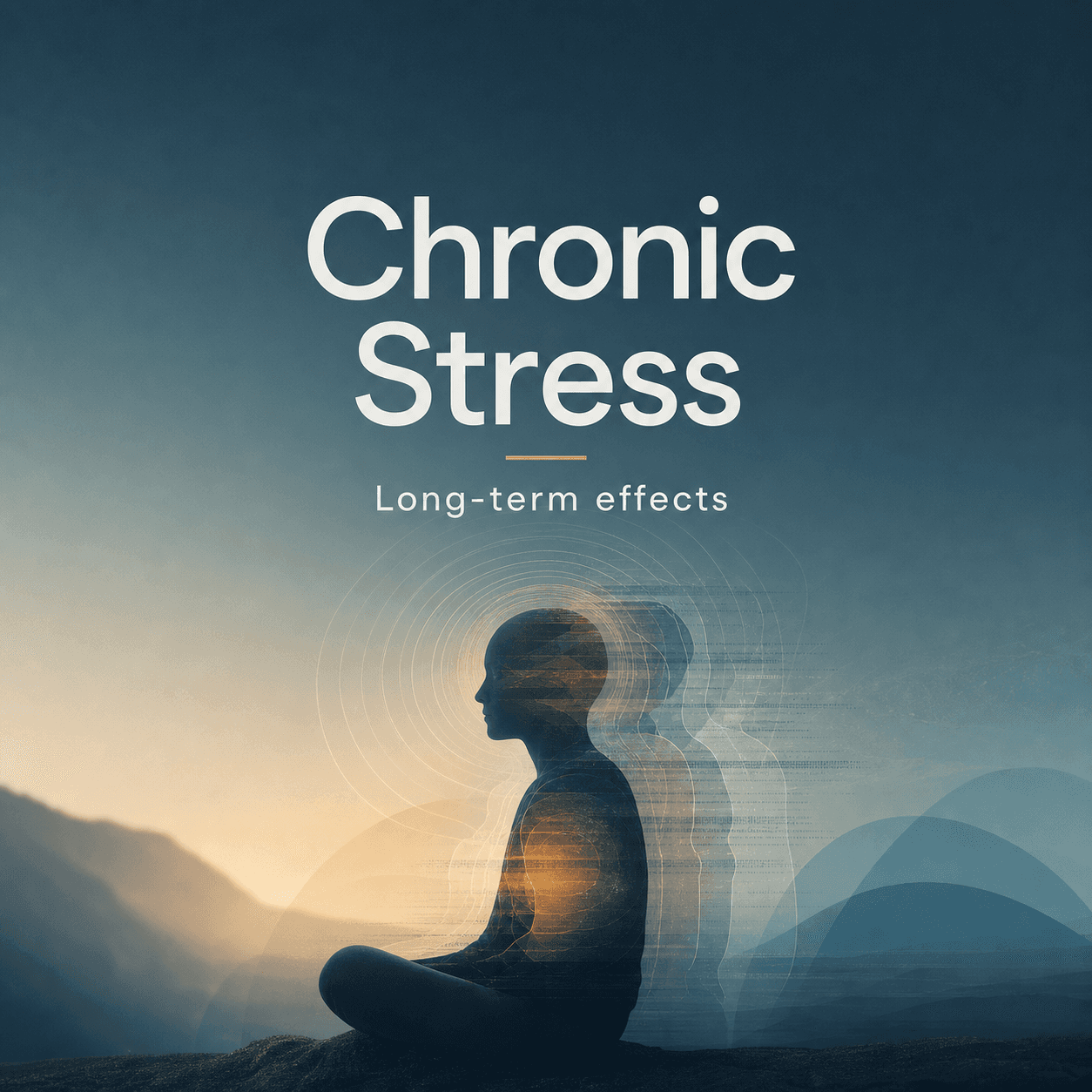
Stress gets a bad reputation, but the truth is, you actually need some of it.
A deadline can push you to focus. A close call can keep you alert. Even excitement can look like stress in your body for a minute.
The issue is not stress.
It’s chronic stress. The kind that shows up every day, hangs around in the background, and slowly becomes your normal. The kind you stop noticing until your body starts complaining in louder ways.
And chronic stress is sneaky because it rarely arrives with one dramatic moment. It’s more like too many open tabs for too long.
This is a breakdown of what chronic stress does over time, why it can mess with basically every system you have, and what you can do about it in a realistic way.
What “chronic stress” actually means (and why your body treats it like a threat)
When something stressful happens, your brain and body run a pretty old survival program.
Your brain spots a threat, real or perceived, and activates a stress response through the nervous system and hormones. Adrenaline ramps you up. Cortisol helps mobilize energy. Your heart beats faster, your breathing changes, your attention narrows. You’re primed to act.
In short bursts, this is useful.
In chronic stress, the switch doesn’t fully turn off.
Maybe it’s financial pressure. Relationship conflict. A demanding job. Caregiving. Living with ongoing uncertainty. Or even internal stress, like perfectionism, trauma history, constant self-criticism, social anxiety, chronic overthinking.
Your body doesn’t always care whether the “threat” is a tiger or an inbox.
It reacts. Again and again.
Over months and years, that constant activation starts changing how you sleep, digest, think, heal, and regulate emotions. It also changes what your baseline feels like. Some people get wired. Some people get numb. Many people get both, just at different times.
The nervous system: stuck in fight or flight (or freeze)
One of the biggest long-term effects of chronic stress is nervous system dysregulation.
Instead of moving flexibly between states (focused, relaxed, asleep, alert), your system becomes sticky. You get stuck in fight or flight, or in freeze, or in a weird combination that feels like anxious exhaustion.
Common signs this is happening:
- You’re on edge, easily startled, always scanning for problems
- You feel restless but tired
- You get irritated fast, especially at small things
- You shut down emotionally, feel detached, spaced out
- Your body feels tense even when nothing is happening
- You have trouble relaxing without distractions
This matters because your nervous system is like the master volume knob. If it’s cranked up all the time, everything else gets louder too. Pain. Inflammation. Worry. Cravings. Sleep issues. Even your perception of other people.
And long-term, living in a high-alert state can make you feel like the world is unsafe even when it isn’t. That’s not a personality flaw. It’s a body response that learned a pattern.
The brain: memory, mood, attention, and “why can’t I think anymore?”
Chronic stress changes the brain in ways that show up in everyday life.
You may notice:
- Brain fog
- Trouble concentrating
- Forgetfulness
- Feeling emotionally reactive
- Feeling flat and unmotivated
- Constant rumination
Here’s what’s going on, broadly.
Cortisol and the “thinking brain” vs the “survival brain”
When stress is high, the brain prioritizes survival. The amygdala (threat detection) tends to become more active. The prefrontal cortex (planning, impulse control, decision making) can get less effective under prolonged strain.
So you might intellectually know what to do, but you can’t access that calm, organized part of yourself in the moment.
Chronic stress is also linked with changes in the hippocampus, which plays a big role in learning and memory. That can contribute to the scattered feeling people describe, like they’re always behind, always trying to catch up.
Stress and mental health
Long-term stress increases risk for anxiety and depression, and it can worsen existing symptoms. Not because you’re weak. Because prolonged stress changes sleep, hormones, inflammation, and thought patterns.
It also makes coping behaviors more rigid. If your system is overwhelmed, it’ll reach for quick relief. Doomscrolling. Alcohol. Overeating. Overworking. Isolation. People pleasing. Whatever works fastest.
It makes sense. But over time those habits can become their own stressors.
The heart and blood vessels: wear and tear you don’t feel until you do
Chronic stress is associated with higher risk of cardiovascular problems over time.
When your stress response is frequently activated, you get repeated spikes in heart rate and blood pressure. Your blood vessels experience more strain. Stress can also influence behaviors that affect heart health, like sleep quality, exercise, smoking, drinking, and food choices.
This doesn’t mean stress alone “causes” heart disease in a simple way. It’s more like. Stress piles onto other risk factors. It contributes to the overall load.
If you’ve ever felt your heart pounding during a stressful period, that’s the acute version. The long-term version is subtler and more serious. It’s the background pressure that increases wear over years.
The immune system: inflammation and getting sick more often (or feeling run down constantly)
Stress and immunity have a complicated relationship.
Short term stress can sometimes temporarily boost certain immune functions. But chronic stress tends to impair immune regulation and is associated with increased inflammation.
And inflammation is one of those words that sounds vague until you realize it connects to a lot:
- Frequent colds or infections
- Slower wound healing
- Flare-ups of autoimmune conditions
- More aches and pains
- Skin issues that worsen under stress (eczema, psoriasis, acne)
- Persistent fatigue
Some people experience chronic stress as “I never feel fully well.” Not necessarily sick in an obvious way. Just not right. Low energy, low resilience.
Inflammation can also interact with mood. There’s growing research interest in how inflammation relates to depression symptoms in some individuals. Again. Not a single cause. But part of the web.
Digestion and gut health: stress shows up in your stomach fast
If you’ve ever gotten an upset stomach before a big event, you already know the gut is stress-sensitive.
Long-term stress can contribute to:
- Acid reflux and heartburn
- IBS symptoms (constipation, diarrhea, bloating)
- Nausea
- Appetite changes, either increased or decreased
- Changes in gut motility and sensitivity
Stress affects digestion partly because the body redirects energy away from “rest and digest” toward “deal with the threat.”
Also, your gut has its own nervous system and interacts with the brain through the gut-brain axis. So when stress is chronic, it can keep the gut in a reactive state. The gut becomes more sensitive. Foods that were fine suddenly aren’t. Or symptoms flare for no clear reason.
Then, of course, gut issues are stressful. So you get a loop.
Sleep: the place where stress cashes its check
If stress is constant, sleep is usually one of the first casualties.
You might have trouble falling asleep, staying asleep, or getting deep sleep. Or you sleep but never feel restored. Which is its own kind of frustrating.
Over time, chronic sleep disruption affects everything:
- Mood and emotional regulation
- Focus and memory
- Appetite hormones
- Immune function
- Pain sensitivity
Also. Sleep deprivation increases stress reactivity. You become more reactive to things you’d normally brush off. So again, loop.
A lot of people try to solve stress by pushing harder during the day, and then they try to “force” sleep at night. But the body doesn’t respond to forcing. It responds to safety cues, routine, and downshifting over time.
Hormones and metabolism: weight changes, blood sugar swings, and cravings
Cortisol influences energy availability. In chronic stress, cortisol patterns can become dysregulated. Some people have elevated cortisol at night. Some people have blunted cortisol responses after long burnout. It varies, and it’s not always a simple lab test story.
But the effects people notice often include:
- Increased cravings for high sugar, high fat foods
- Emotional eating, mindless snacking
- Blood sugar swings that feel like energy crashes
- Weight gain around the midsection for some people
- Weight loss for others, especially if appetite drops
Stress can also influence insulin sensitivity and lipid levels, especially when combined with poor sleep and reduced activity.
And to be clear, if weight changes happen during chronic stress, it’s not a moral issue. It’s physiology plus environment. The body is trying to cope and survive. Understanding the link between stress and its physiological impact can help in managing these changes effectively.
Muscles and pain: tension that turns into chronic discomfort
Chronic stress tends to keep muscles slightly contracted.
Neck and shoulder tension. Jaw clenching. Tension headaches. Back pain. Tight hips. Even pelvic floor issues in some cases.
If your body never fully relaxes, tension becomes a default posture. Then you start compensating in movement. Then things hurt more.
Stress also increases pain sensitivity through nervous system pathways. So pain that might have been manageable becomes louder.
This is part of why some people feel like their body is “falling apart” during long periods of stress. It’s not imagined. It’s a system that’s been bracing for a long time.
Reproductive and sexual health: libido, cycles, and fertility can shift
Chronic stress can affect reproductive hormones and sexual functioning.
People might experience:
- Lower libido
- Erectile dysfunction or difficulties with arousal
- Changes in menstrual cycle regularity
- Worsened PMS or PMDD symptoms
- Fertility challenges in some cases
Stress isn’t the only factor in these issues, obviously. But long-term stress can disrupt hormonal signaling and reduce the body’s sense of safety, which matters for sexual response.
Also, stress can impact intimacy indirectly. If you’re overwhelmed, resentful, exhausted, or emotionally shut down, desire often takes a hit.
Behavior changes: how chronic stress reshapes your life without asking permission
This is the part people don’t always connect to “stress,” but it’s huge.
Chronic stress changes your behavior. Not because you’re lazy. Because your bandwidth shrinks.
You might:
- Isolate more
- Skip exercise or movement
- Stop cooking and rely on convenience foods
- Drink more alcohol or use substances to unwind
- Overwork to feel in control
- Procrastinate because everything feels heavy
- Snap at people you care about
- Spend hours on your phone to escape your thoughts
And it compounds. The habits created by stress can create more stress, plus guilt, plus conflict, plus health effects.
One of the most damaging long-term effects is when you start building a life around avoiding stressors, instead of building skills and support to handle them. Avoidance feels good short-term. Long-term it makes the world smaller.
Burnout: when the system stops cooperating
Burnout is not just “tired.”
It’s a state of emotional exhaustion, cynicism or detachment, and reduced sense of efficacy. It often comes from chronic workplace stress, but it can also come from caregiving, chronic illness management, or long-term life strain without relief.
What burnout feels like:
- You can’t make yourself care, even about things you used to care about
- Rest doesn’t fix it
- Your motivation is gone
- You feel trapped
- Small tasks feel overwhelming
Burnout isn’t solved by a single weekend off. It usually requires deeper changes: boundaries, workload, support, sometimes therapy, sometimes medical evaluation, sometimes career shifts. And time. Annoyingly, time.
Long-term stress and aging: the “weathering” effect
There’s a concept in public health sometimes called “allostatic load,” basically the accumulated wear and tear from chronic stress.
You don’t feel allostatic load directly. You feel it as a collection of symptoms, diagnoses, and decreased resilience.
People under chronic stress often notice they recover more slowly. They get sick more easily. Their patience is thinner. Their body feels older than their age.
This is especially relevant for people living under ongoing social or economic stress, discrimination, unstable housing, or chronic caregiving burdens. It’s not just individual stress management. It’s the conditions people live in.
How to tell if stress is becoming chronic (a quick self-check)
If you’re unsure whether what you’re experiencing “counts,” it probably does. But here are a few clues.
Chronic stress often looks like:
- You can’t remember the last time you felt truly relaxed
- You’re always catching up, even after finishing things
- Your body symptoms flare when life gets busy
- You feel tired but wired, or tired but anxious
- You rely on numbing behaviors nightly to unwind
- You feel emotionally reactive, or emotionally shut down
- Your sleep is consistently off for weeks or months
If you’re seeing this pattern, it’s worth taking seriously before it turns into something bigger.
What helps, realistically (not perfect, just helpful)
You don’t “eliminate” chronic stress by doing one breathing exercise and buying a candle. Sometimes candles are nice though.
You reduce chronic stress by changing inputs and increasing recovery. Usually both.
Here are some approaches that tend to matter over time.
1. Reduce the stressors you actually can reduce
This sounds obvious, but people skip it and jump straight to self-care.
Ask:
- What is the ongoing stressor?
- Is it solvable, adjustable, or is it something I need support to endure?
- What is one boundary or change that would reduce this by 10 percent?
Sometimes the answer is hard. Leave a job. End a relationship. Ask for help. Change your schedule. Get childcare support. See a financial counselor. Talk to your doctor about symptoms. File the paperwork you’re avoiding.
Not fun. But powerful.
2. Build daily downshifts, not occasional resets
Your nervous system needs regular signals of safety.
Simple downshifts:
- A 10 minute walk without your phone
- Stretching your neck and shoulders while breathing slowly
- Eating one meal without multitasking
- A consistent wind-down routine at night
- Sunlight in your eyes early in the day
- Calling a friend and actually talking, not just texting
Little things, repeated, create change.
3. Move your body in a way that feels doable
Movement helps metabolize stress hormones and supports sleep and mood.
This does not have to be intense. Sometimes intense workouts add more stress if you’re already depleted.
Think: walking, light strength training, swimming, yoga, cycling, even cleaning counts. The goal is consistency and feeling better after, not punishment.
4. Get checked medically when symptoms are persistent
Stress can cause a lot. But not everything is stress.
If you have ongoing fatigue, palpitations, chest pain, significant weight change, digestive issues, headaches, or mood symptoms that are interfering with life, it’s worth seeing a clinician.
Sometimes “stress” is covering up things like thyroid problems, anemia, sleep apnea, vitamin deficiencies, hormonal issues, or medication side effects.
You deserve to know what’s going on.
5. Consider therapy, especially for chronic patterns
If your stress is tied to trauma, anxiety, perfectionism, people pleasing, or chronic relationship dynamics, therapy can help untangle the pattern, not just manage symptoms.
Sometimes the biggest stressor is the way your mind speaks to you all day. That can change. It really can.
The main point
Chronic stress is not just feeling busy.
It can change your brain, your sleep, your immune function, your digestion, your heart health, your hormones, your pain levels, your relationships, and the way you see yourself. Over time, it narrows your life.
But it’s also not a life sentence.
Small changes help. Support helps. Boundaries help. Medical care helps. And the earlier you treat chronic stress as a real health issue, the easier it is to reverse course.
If you take one thing from this. Don’t wait until your body forces you to listen.
Start listening now, while the volume is still low enough to respond.
FAQs (Frequently Asked Questions)
What is chronic stress and how does it differ from regular stress?
Chronic stress is the kind of stress that persists over a long period, showing up every day and becoming a constant background presence. Unlike short bursts of stress which can be useful for focus and alertness, chronic stress keeps your body’s stress response activated continuously, leading to negative effects on your health and well-being.
How does chronic stress affect the nervous system?
Chronic stress causes nervous system dysregulation, meaning your system gets stuck in fight, flight, or freeze states. This results in symptoms like feeling on edge, restlessness combined with tiredness, irritability, emotional detachment, muscle tension, and difficulty relaxing without distractions. This heightened state amplifies pain, inflammation, worry, sleep problems, and even how you perceive others.
In what ways does chronic stress impact brain function?
Chronic stress alters brain function by increasing activity in the amygdala (threat detection) while reducing effectiveness of the prefrontal cortex (planning and decision-making). This leads to brain fog, trouble concentrating, forgetfulness, emotional reactivity or flatness, lack of motivation, and persistent rumination. It also affects memory through changes in the hippocampus.
Can chronic stress increase the risk of mental health issues like anxiety and depression?
Yes. Prolonged chronic stress raises the risk for anxiety and depression by disrupting sleep patterns, hormone balance, increasing inflammation, and reinforcing rigid coping behaviors such as doomscrolling or overeating. These changes are physiological responses rather than signs of personal weakness.
How does chronic stress affect heart health over time?
Frequent activation of the stress response causes repeated spikes in heart rate and blood pressure which strain blood vessels. Over time this contributes to wear and tear on the cardiovascular system. Chronic stress also influences lifestyle factors like sleep quality and diet that further impact heart health. While not a direct cause alone, it adds to overall cardiovascular risk.
What is the relationship between chronic stress and the immune system?
Chronic stress has a complex effect on immunity. While short-term stress might boost immune function temporarily, ongoing chronic stress can lead to increased inflammation and make you more susceptible to illnesses or cause you to feel constantly run down. This happens because prolonged activation of the body’s stress response disrupts normal immune regulation.