










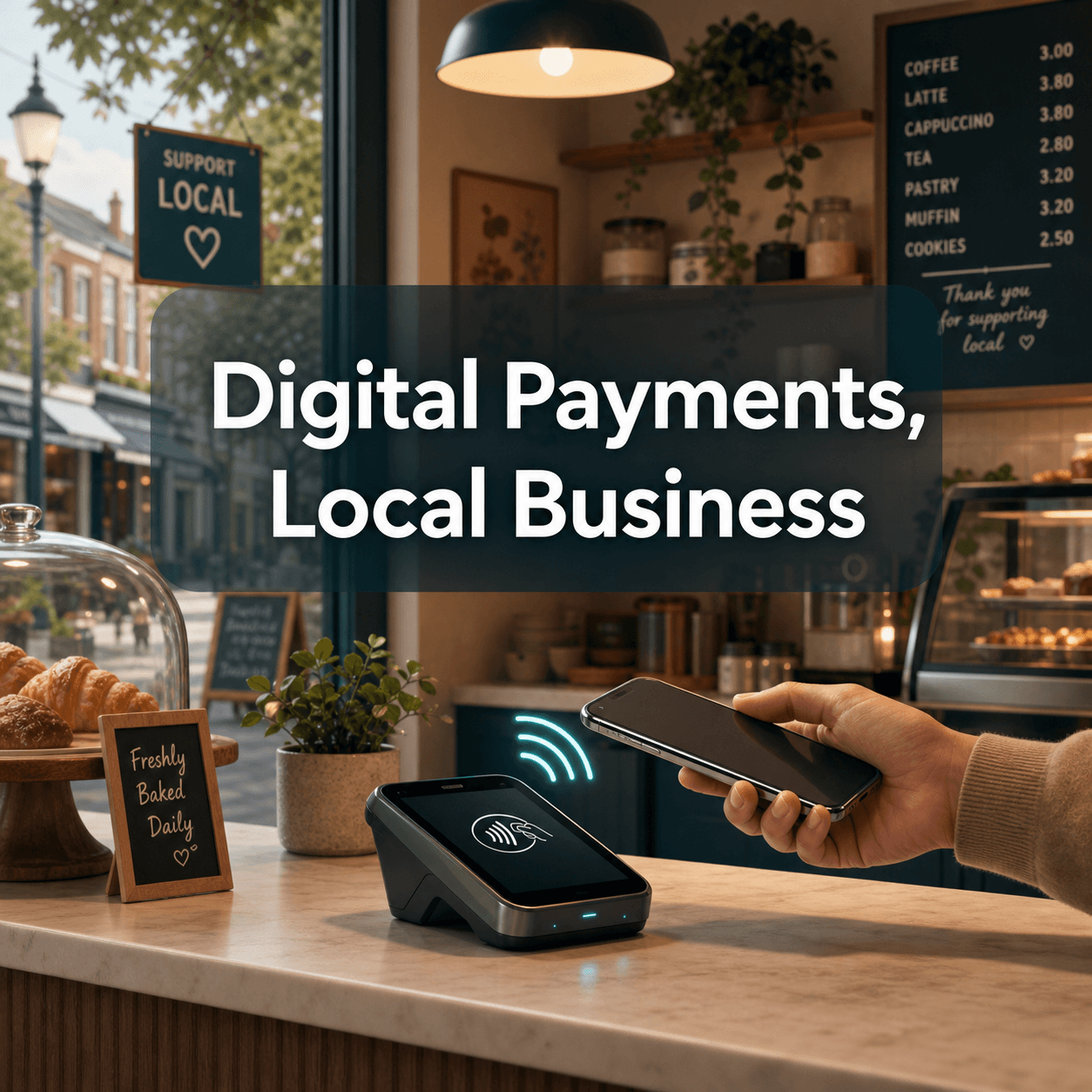
Walk into a neighborhood cafe today and it is almost funny how quickly the old little rituals are disappearing.
No more awkward digging for coins. No more “sorry, I only have a hundred.” No more tiny card reader that needs to be tapped three times before it wakes up. Now you just tap your phone, or scan a QR code stuck to the counter, and you are already halfway out the door.
And it is not just convenience. Digital payments are quietly changing how local businesses run day to day. How they price things. How they market. How they hire. Even how they survive slow seasons.
I have seen it happen in small ways. A barber who used to lose track of appointments now links payments to bookings. A street food stall that used to be cash only now sells more because tourists can pay instantly. A local boutique that always struggled with “slow Tuesdays” now sends a small promo to past customers and gets a quick bump in sales.
It is not magic. But it is a real shift.
Let’s talk about what is actually changing, and why it matters.
Cash is not dead, but it is no longer the default
Most local businesses still take cash. A lot of them need to. Tips, small purchases, older customers, areas where internet is unreliable. Cash is still there.
But the default behavior is changing.
Customers now expect digital options. Especially younger buyers, commuters, tourists, and basically anyone who does not want to carry a wallet full of stuff. And once customers expect it, “cash only” stops being charming and starts being friction.
Friction is expensive. It is lost impulse purchases. It is people choosing the shop next door because they do not want to deal with an ATM.
And the thing is, the business owner often does not notice the lost sale. The customer just leaves. Quietly.
Digital payments remove that little speed bump. Which sounds small, but across hundreds of transactions a week, it changes the rhythm of the business.
Faster checkouts, more sales, and fewer weird moments
The obvious win is speed. Tap to pay, QR scans, online invoices. Customers pay quicker, lines move faster, staff spend less time handling money, counting change, and dealing with “uh, the machine says declined but my bank says it went through.”
Those weird moments matter. They create stress. They slow down service. They can even lead to awkward conflict.
In busy local businesses, speed equals capacity.
A small takeaway spot that can process 15 percent more customers during lunch rush can end up with a totally different revenue line by the end of the month. Not because they raised prices, but because they served more people with the same staff.
Also, when paying is easy, people buy more casually. Add a drink. Add dessert. Tip more often. That last one is interesting because digital tipping has made tipping more common in some places, even for services where tipping used to be inconsistent.
Better records. Which sounds boring. But it changes everything.
This is the part business owners start caring about once the novelty wears off.
Digital payments create a trail. A clean one, ideally.
Instead of a shoebox of receipts or a rough notebook tally, you get transaction histories, daily totals, itemized sales, time stamps, staff performance, and patterns you can actually see.
A lot of local businesses run on gut feel. Which is not bad, it is just limited. “Mondays are slow.” “Rainy days kill us.” “This product sells well.”
Digital payments and modern POS systems turn those feelings into something measurable:
- Which hours are most profitable
- Which items sell together
- Which days have the highest average basket size
- How discounts affect total revenue
- Whether the new menu item is a hit or just hype
And when you have the data, you can make less emotional decisions.
Like, maybe Tuesdays are slow, but not from 5 pm to 7 pm. Maybe your best customers come on Thursdays. Maybe the item you thought was a bestseller is actually only popular because it is always placed near the register.
Small businesses do not need a massive analytics team. They just need visibility.
Taxes and compliance get less painful (most of the time)
Nobody starts a local business because they love bookkeeping.
But digital payments can make the admin side less chaotic. You can export reports. Match invoices. Reconcile daily sales. Track VAT or sales tax where applicable. Share cleaner info with your accountant.
For businesses that used to underreport because cash made it easy, digital payments can be a tough adjustment. Not going to pretend otherwise. Some owners feel exposed. Some worry about fees and tax visibility.
Still, for many legitimate small businesses, having accurate records is a relief. It can reduce disputes, help with audits, and just remove that constant background anxiety of “I hope my numbers are right.”
And it becomes really important when you want to grow.
Access to financing changes when your sales are visible
This is one of the biggest, least talked about transformations.
When a business runs mostly on cash, proving revenue is harder. Banks and lenders want evidence. They want statements, consistency, predictable inflows. Cash heavy businesses often look riskier on paper, even if they are thriving.
Digital payments create a verifiable revenue history. That can help businesses qualify for:
- Small business loans
- Working capital offers
- Equipment financing
- Better insurance terms in some cases
- Even a lease negotiation, because you can show stability
Some payment providers also offer financing based on payment volume. It is not always cheap, and you should read the terms carefully. But the point is, digital transactions make businesses legible to financial systems.
That is a big deal for a local shop that wants to renovate, hire, expand inventory, or open a second location.
Loyalty programs stop being punch cards that everyone loses
Remember stamp cards. Buy nine coffees, get one free. Cute idea. Terrible tracking. Customers forget them, and staff do not always want to deal with it during a rush.
Digital payments connect naturally to loyalty systems. Either through the POS, a phone number, an app, or even just a receipt that invites a future discount.
Local businesses can now do loyalty like bigger chains, but without feeling too corporate:
- Track repeat customers
- Offer rewards based on spend, not just visits
- Send a birthday discount automatically
- Give VIP perks to high frequency buyers
- Bring back lapsed customers with a small offer
This matters because retention is usually cheaper than acquisition. If you are a local business, you do not have infinite budget for ads. But you do have people who already like you.
Digital payments make it easier to keep those people close.
Local marketing becomes less guesswork, more targeted
Once transactions are tracked, marketing can get smarter. Not in a creepy way, just in a practical way.
Instead of throwing out general promos like “10% off this weekend,” businesses can do more specific things:
- “We miss you” offers to customers who have not visited in 60 days
- Upsells based on past purchases
- Limited time bundles that match real buying patterns
- Post purchase follow ups, like “leave a review” or “book your next appointment”
Even simple email receipts can be marketing if done right. A receipt with a friendly message, social links, and a small incentive can turn a one time customer into a regular.
And for service businesses like salons, fitness studios, mechanics, cleaning services, digital payments often connect with booking tools. That is where things get powerful. Booking plus payment plus reminders means fewer no shows and more predictable schedules.
Online and offline finally blend together for small shops
A few years ago, “local business” meant physical location. Now it is more like a brand that happens to be local.
Customers might discover a bakery on Instagram, browse the menu in Stories, order online, pay in advance, pick up at the counter, and leave a review later. That is one customer journey, but it touches a bunch of systems.
Digital payments are what make this blend possible.
Even a small shop can now do:
- Click and collect
- Delivery payments without cash handling
- Deposits for custom orders
- Prepaid gift cards and digital vouchers
- Subscription models for repeat products, like weekly flowers or monthly coffee beans
And once payments can happen online, the business is not limited by walk in traffic in the same way. It is still local, but the selling window expands.
This was a huge survival tool during the pandemic, and honestly, a lot of businesses never went back. Because why would they.
Tips, payouts, and staff management get cleaner
If you have staff, cash can be messy.
Who is owed what. How much cash is in the drawer. Did tips get split correctly. Did someone forget to record a sale. Did the register come up short.
Digital payments reduce a lot of that.
Many systems now let owners track sales by employee, manage shifts, and even automate tip pooling. Some connect to payroll tools. Some allow instant payouts or next day payouts, which can help staff who live paycheck to paycheck.
Also, staff generally feel safer when there is less cash on site. Less temptation, fewer theft risks, fewer uncomfortable end of night counting sessions.
It is not glamorous, but it improves operations.
Security improves, but scams evolve too
Less cash on the premises reduces the risk of physical theft. That is a real benefit for small shops.
But digital payments come with their own risks:
- Chargebacks and disputes
- Fake “payment sent” screenshots
- QR code tampering in rare cases
- Phishing attempts targeting business accounts
- Employee errors, like keying in wrong amounts
Local businesses have to learn a new kind of vigilance. The good news is that most major providers include fraud detection and encryption, and card networks have clear dispute processes.
Still, owners should set simple rules:
- Never accept screenshot proof as payment confirmation
- Use official apps and check transaction status inside the system
- Train staff on refunds and dispute handling
- Keep devices updated, lock down admin access, and use strong passwords
Digital is safer in many ways, but it is not “set and forget.”
Fees are real. But so are the hidden costs of cash.
This is usually the main argument against digital payments. The processing fees.
And yes, fees can sting, especially for low margin businesses. A small percentage of every sale adds up. It can feel like paying rent to a company you do not even see.
But cash has costs too, they are just less obvious:
- Time spent counting and reconciling
- Bank deposit trips
- Risk of theft or loss
- Human error in change and recording
- Slower checkout lines
- Lost sales from customers who cannot pay
Many business owners eventually land on a mixed approach. Accept multiple payment methods, price appropriately, and treat fees like a cost of doing business in exchange for higher conversion and smoother operations.
Some raise prices slightly. Some offer small cash discounts where allowed. Some push larger purchases to bank transfer. There is no single perfect strategy.
But ignoring digital payments entirely is usually the most expensive option long term.
What this transformation looks like in real local businesses
Here are a few examples that come up again and again.
1. The cafe Digital payments speed up morning rush, reduce cashier stress, and make loyalty simple. They also open up mobile ordering, which can smooth out peaks and reduce crowding.
2. The salon or barber Deposits reduce no shows. Tap to pay makes checkout less awkward. Staff can track commissions more accurately. Reviews and rebooking become part of the same flow.
3. The local market stall QR payments remove the need to carry change. Tourists buy more. Sellers can track which days and events are most profitable.
4. The small retail boutique Inventory tools combined with digital sales data show what is actually moving. Owners can run targeted promos and sell gift cards online during slow periods.
5. The home service business Invoices and payment links mean faster collections. Less chasing. Less “I will pay later.” And cleaner records at tax time.
Each business type benefits differently, but the theme is the same. Digital payments reduce friction, increase clarity, and open doors to new ways of selling.
The next phase: digital payments as an operating system
What is happening now is bigger than just “people pay with cards.”
Payments are becoming the center of the business stack. When payments connect to POS, inventory, marketing, loyalty, payroll, accounting, and booking, the business runs differently.
Local businesses start to operate with the same kind of systems that used to be reserved for chains. Not identical, but closer.
And it changes the competitive landscape. A small shop with a smooth checkout, easy online ordering, and quick service can beat a larger competitor that still feels clunky.
That is the interesting part. Digital payments are not only helping big companies. They can be a real advantage for small, local places that move quickly.
Final thoughts
Digital payments are transforming local businesses in quiet, practical ways.
They make checkout faster. They improve record keeping. They unlock financing. They make loyalty and marketing easier. They reduce some risks and introduce new ones. And they let local businesses sell beyond the physical counter, without losing what makes them local in the first place.
If you run a local business, you do not need to adopt every new payment trend. You just need to remove friction for your customers and build systems that make your day less chaotic.
And if you are a customer, honestly. The next time you tap your phone at a little shop and it feels effortless, just know there is a lot going on behind that tiny moment.
A whole business is getting sharper, one transaction at a time.
FAQs (Frequently Asked Questions)
How are digital payments changing local neighborhood businesses?
Digital payments are transforming local businesses by speeding up transactions, improving record-keeping, enabling targeted marketing, streamlining hiring, and helping businesses survive slow seasons. They remove friction in sales, increase customer convenience, and provide valuable data insights that help owners make informed decisions.
Is cash still commonly used in local businesses despite the rise of digital payments?
Yes, cash remains important for many local businesses due to tips, small purchases, older customers, and areas with unreliable internet. However, digital payment options are becoming the expected default for many customers, especially younger buyers and tourists, making ‘cash only’ policies less appealing and potentially costly due to lost sales.
What are the main benefits of faster checkouts through digital payments?
Faster checkouts reduce wait times, increase customer throughput during busy periods, decrease staff time spent handling cash and resolving payment issues, and encourage casual additional purchases like drinks or tips. This enhances capacity and can significantly boost revenue without raising prices or increasing staff.
How do digital payments improve business record-keeping and decision-making?
Digital payments generate detailed transaction histories with itemized sales data, timestamps, staff performance metrics, and sales patterns. This visibility helps business owners move beyond gut feelings to data-driven decisions about peak hours, best-selling products, discount effects, and customer behavior—ultimately optimizing operations and profitability.
In what ways do digital payments simplify taxes and compliance for small businesses?
Digital payment systems allow easy export of reports, invoice matching, daily sales reconciliation, and accurate tracking of VAT or sales tax. This reduces bookkeeping chaos, minimizes disputes or audit risks, provides cleaner information for accountants, and alleviates anxiety over financial accuracy—especially beneficial for legitimate small businesses aiming to grow.
How does accepting digital payments affect a local business’s access to financing?
By providing verifiable revenue histories through digital transactions, businesses become more transparent and credible to banks and lenders. This improves their chances of qualifying for small business loans, working capital offers, equipment financing, better insurance terms, or favorable lease negotiations. Digital payment data makes a business’s financial health clearer and more trustworthy to financial institutions.