











There are two kinds of travelers.
The first kind goes to museums, takes the photos, buys the magnet, calls it a day.
The second kind is standing on a random corner at 11:47 pm eating something out of a paper bag, a little spicy oil dripping down their wrist, thinking, oh. This is the whole point of the trip.
Street food does that. It cuts through the fancy restaurant anxiety. No reservations. No dress code. You just follow the smoke, the crowd, the smell of grilled meat or hot sugar, and suddenly you are eating the thing everyone mentioned five times before you even landed.
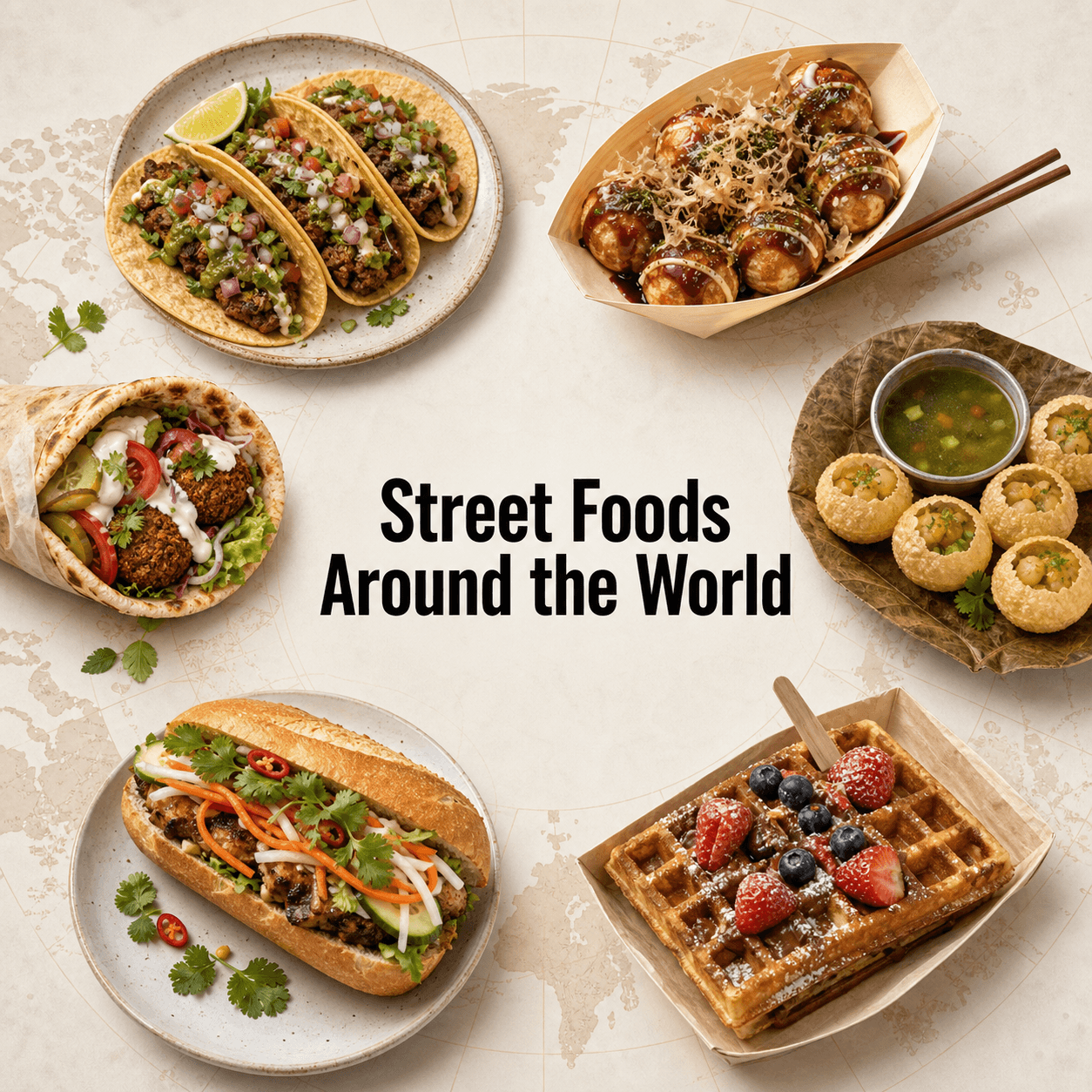
So here are street foods around the world tourists genuinely cannot stop talking about. Not the polite, oh it was nice kind of talking. The I miss it and I am searching for a decent version back home kind.
Pad Thai (Bangkok, Thailand)
Yes, it is famous. Yes, it is touristy. And yes, when you get a great plate from a busy cart in Bangkok, it still hits like a revelation.
You get the wok heat. The noodles are slick but not soggy. Tamarind tang, fish sauce depth, palm sugar sweetness, lime on top. Crunchy peanuts. Maybe shrimp, maybe chicken, maybe tofu. And the best part is watching it happen in front of you, fast hands, high flame, a metal spatula that never rests.
If you see a stall with a line of locals and a cook who looks mildly annoyed at everyone, get in that line.
However, not all street food needs to be heavy or meat-based to be delicious. For instance, if you’re ever in Singapore and find yourself craving something different yet equally satisfying as Pad Thai or other popular street foods, you might want to try Vegan Mee Siam, a dish that’s packed with flavor and offers a unique twist on traditional street food.
Tacos al Pastor (Mexico City, Mexico)
There are tacos, and then there are tacos al pastor at midnight in Mexico City.
You will spot the trompo first, that tall spit of marinated pork stacked like a sculpture, turning slowly beside heat. The taquero slices off thin pieces with a rhythm that feels like music, then, if you are lucky, flicks a bit of pineapple down onto your tortilla without even looking.
Soft corn tortilla. Pork with chile and achiote. Sweet char. Onion and cilantro. Lime squeezed hard. Salsa that you should respect because it is not playing around.
Tourists talk about these the way people talk about their first great concert.
Bánh Mì (Ho Chi Minh City, Vietnam)
Bánh mì is what happens when a sandwich becomes a whole culture.
The bread matters. Light, crackly, warm. Inside, you get a mix of rich and fresh, usually some kind of pork, pâté, maybe a little mayo, then pickled daikon and carrot, cucumber, cilantro, and sliced chilies if you are brave or pretending to be.
One bite and it is crunchy, tangy, savory, a little spicy. It should feel messy but balanced. You can eat it walking. You can eat it sitting on a tiny plastic stool. You can eat it two days in a row and still want it again.
Arepas (Caracas, Venezuela and across Colombia)
Arepas are comforting in a way that makes tourists start plotting how to recreate them at home.
They are corn cakes, griddled until golden, then split open and stuffed. The filling options are basically endless, but the classics have loyal fans. Reina pepiada, that chicken and avocado mix that somehow tastes both rich and bright. Shredded beef. Black beans and cheese. Just cheese, honestly.
You get a crisp outside and a soft interior that soaks up whatever you put inside. The kind of street food that feels like someone is taking care of you, even if you are eating it on a curb.
Simit (Istanbul, Turkey)
Simit looks simple. A sesame crusted bread ring. But Istanbul has a way of making simple things addictive.
It is chewy, toasted, and covered in sesame seeds that fall everywhere, so you will be brushing your shirt afterward. People eat it for breakfast, as a snack, on ferries, on sidewalks, while commuting. Tourists love it because it is cheap, satisfying, and weirdly photogenic, especially with tea.
Bonus move is eating simit with a bit of cheese or spread, but even plain it works.
Jerk Chicken (Kingston, Jamaica)
You smell jerk chicken before you see it. That smoky, spicy, sweet scent drifting across the road like it has a mission.
The chicken is cooked over pimento wood when it is done traditionally, and the seasoning is the whole point. Scotch bonnet heat, thyme, allspice, garlic, that deep spicy perfume that makes your nose wake up. The outside gets charred and sticky. The inside stays juicy.
Tourists talk about jerk chicken because it is not just spicy. It is layered. It tastes like a place.
Khao Soi (Chiang Mai, Thailand)
This is one tourists “accidentally” find and then won’t shut up about.
Khao soi is a Northern Thai curry noodle soup, creamy and fragrant, usually with chicken, served with both soft egg noodles and a pile of crispy fried noodles on top. Coconut curry broth with a gentle heat. Pickled mustard greens, shallots, lime on the side so you can tweak it.
It is rich, but not heavy in a boring way. More like, you eat it and your shoulders drop. Chiang Mai has a lot of great food, but khao soi gets the love letters.
Pani Puri or Golgappa (Mumbai, India)
This is street food with a little drama built in.
You get a crisp hollow puri, it gets filled with potato or chickpeas, then dunked or poured full of spiced water, tangy and herbal and sometimes fiery. You pop the whole thing in your mouth in one go, and it explodes. Crunch, then a flood of flavor.
Tourists talk about it because it is interactive, intense, and honestly kind of hilarious the first time you try to eat it gracefully. You will fail. It is fine.
Eat it at a busy stall, watch how locals do it, and go one at a time. Freshness is everything here.
Döner Kebab (Berlin, Germany and Turkey)
Berlin tourists fall hard for döner. Partly because it is delicious, partly because it is there when you need it most, which is usually late at night.
You get slices of seasoned meat shaved off the spit, stuffed into bread with salad, onions, maybe feta, and a couple sauces. Garlic sauce, spicy sauce, sometimes an herby yogurt vibe. It is filling and messy and exactly what you want after walking all day.
In Turkey you will find versions that feel more traditional, but Berlin’s style has its own cult following for a reason.
Churros (Madrid, Spain and Mexico City)
Churros are one of those foods that seem like they should be overrated, but then you eat them fresh and you understand.
Hot fried dough, ridged and crisp, dusted with sugar. In Spain, people dip them into thick hot chocolate that is almost pudding. In Mexico, you might get them longer, sometimes filled with cajeta or chocolate. Either way, the joy is in the contrast. Crunch outside, soft inside, sweetness that is comforting not cloying.
Tourists talk about churros like they are describing a childhood memory, even if they did not grow up with them.
Takoyaki (Osaka, Japan)
Takoyaki is pure street snack energy.
Little round balls of batter cooked in a special pan, filled with bits of octopus, then turned and shaped with quick little picks. They come out piping hot, topped with takoyaki sauce, mayo, bonito flakes that move like they are alive, and seaweed powder.
The first bite will burn your mouth if you are impatient. Everyone is impatient. The outside is soft, the inside is molten. Tourists love it because it is fun to watch, fun to eat, and feels very Osaka.
Hotteok (Seoul, South Korea)
Hotteok is a sweet street pancake that makes people stop mid walk.
It is a dough ball filled with brown sugar, cinnamon, and nuts or seeds, then pressed flat on the griddle until the sugar melts into a syrupy center. The outside gets crisp. The inside is hot and sticky.
You hold it in a little paper sleeve, trying not to drip sugar lava on your hands. You will still drip a bit. Tourists talk about hotteok because it is cozy and ridiculously satisfying in cold weather.
Bunnies Chow (Durban, South Africa)
The name alone gets attention. Then the food keeps it.
Bunny chow is a hollowed out loaf of bread filled with curry, often beans, lamb, chicken, whatever the place does best. It is hearty, spicy, and meant to be eaten with your hands, tearing off pieces of bread to scoop up curry.
It is messy. It is filling. It tastes like comfort and chaos at the same time.
Tourists who try it tend to become evangelists immediately.
Laap and Som Tam (Vientiane, Laos and Isan Thailand)
Not every street food people obsess over is fried or cheesy. Sometimes it is sharp and fresh and wakes up your whole mouth.
Som tam is green papaya salad, pounded with chilies, lime, fish sauce, garlic, and palm sugar. Crunchy, spicy, sour, a little sweet. Laap is minced meat salad with herbs, toasted rice powder, lime, and heat. Both are bright, aromatic, and unbelievably addictive.
Tourists talk about these because they do not taste like anything back home, and once you get the balance, you crave it.
Crêpes (Paris, France, but also… everywhere)
Parisian street crêpes are a tourist classic, and honestly they deserve it.
You can go sweet with Nutella, sugar and lemon, jam, chestnut spread. Or savory galettes made with buckwheat, filled with ham, cheese, egg. You watch the batter get spread thin in a perfect circle, then folded into a square you can hold while walking along the Seine pretending you live there.
Tourists talk about crêpes because it feels like a movie moment, and because warm bread plus melted filling is a universal language.
Souvlaki (Athens, Greece)
Souvlaki is simple, but the good versions are so good it becomes the meal you keep chasing.
Grilled meat, usually pork or chicken, tucked into pita with tomato, onion, fries sometimes, and a spoonful of tzatziki. It is garlicky, creamy, smoky, fresh. The pita is soft. The meat has char. Everything tastes sunny, even if you are eating it in a crowded square.
Tourists talk about it because it is affordable, fast, and somehow always hits at the exact moment hunger turns into anger.
Knafeh (Amman, Jordan and the Levant)
This is the dessert people remember.
Knafeh is a warm cheese pastry soaked in sweet syrup, often topped with crushed pistachios. The texture is the magic. Crisp shredded pastry on top, stretchy melty cheese inside, syrup that makes it glossy and fragrant.
It is sweet, yes. But not one note sweet. It is buttery, floral sometimes, salty from the cheese, crunchy and soft at the same time.
Tourists talk about knafeh like it is a life event. And if you have it fresh, it kind of is.
Bò Bía and Grilled Skewers (Ho Chi Minh City, Vietnam)
Vietnam deserves a second mention because the street snacking culture is unreal.
Grilled pork skewers, lemongrass beef, little sausages, seafood, all sizzling on tiny grills. And bò bía, those fresh spring roll like snacks filled with crunchy jicama, Chinese sausage, herbs, and sometimes dried shrimp, dipped in a sweet peanut sauce.
Tourists talk about the variety. You can eat five different things in one night and still feel like you missed a hundred more.
A quick reality check before you go eat everything
Street food is one of the best parts of traveling. It is also the part where some people get nervous, understandably.
A few simple rules help a lot:
Pick busy stalls. High turnover usually means fresher food. Watch for clean habits. Gloves help but so does common sense, like separate tongs and covered ingredients. Eat things that are cooked hot when possible. Start slow with spice if you are not used to it. You can always go hotter tomorrow.
Mostly though, trust your senses. If it smells great and locals are lining up, you are probably in the right place.
Wrap up, because now you are hungry
Tourists can’t stop talking about street food because it is not just food. It is a memory you can taste.
It is the taco you ate standing under neon lights. The hotteok that warmed your hands. The pani puri that made you laugh because your eyes watered and you were trying to look cool. The bowl of khao soi that made you cancel your next plan for thirty minutes.
If you are building a travel wishlist, honestly, start with the street food. Pick a city, pick a neighborhood, find the smoke and the noise and the little plastic stools.
And eat the thing everyone is talking about. Then you will be the one talking about it too.
FAQs (Frequently Asked Questions)
What makes street food such a unique and memorable part of travel experiences?
Street food offers an authentic, no-fuss culinary adventure that cuts through the fancy restaurant anxiety. Without reservations or dress codes, you follow the smoke, crowd, and aromas to enjoy dishes that locals love, making it the heart and soul of many trips.
Why is Pad Thai in Bangkok considered a must-try street food despite its popularity?
Pad Thai from a busy cart in Bangkok delivers a revelation with its perfect wok heat, slick but not soggy noodles, balanced tamarind tang, fish sauce depth, palm sugar sweetness, crunchy peanuts, and fresh lime. Watching the fast hands and high flame cooking adds to the experience.
What are Tacos al Pastor and why do tourists rave about them in Mexico City?
Tacos al Pastor feature marinated pork stacked on a rotating spit called trompo, sliced thinly with rhythmic skill, often topped with pineapple. Served on soft corn tortillas with chile, achiote, onion, cilantro, lime, and bold salsa, they offer a flavorful midnight street food experience that feels like a first great concert.
How does Bánh Mì represent Vietnamese culture through street food?
Bánh Mì combines light, crackly bread with rich pork or pâté, pickled daikon and carrot, cucumber, cilantro, and optional chilies for a crunchy, tangy, savory sandwich that’s messy but balanced. It’s versatile for eating on the go or sitting down and leaves tourists craving more.
What are Arepas and why do they hold a special place among street foods in Venezuela and Colombia?
Arepas are golden griddled corn cakes split open to be stuffed with fillings like chicken avocado (reina pepiada), shredded beef, black beans and cheese. Their crisp exterior and soft interior soak up flavors perfectly, offering comforting street food that feels like care even when eaten on a curb.
Why is Jerk Chicken in Kingston considered more than just spicy street food?
Jerk Chicken’s signature smoky scent comes from cooking over pimento wood combined with layers of seasoning including scotch bonnet heat, thyme, allspice, and garlic. Its charred sticky outside and juicy inside create a complex flavor profile that embodies Jamaican culture and leaves tourists talking.