











A weird thing happened to me a couple years ago.
I cleaned up my diet for “energy”. Nothing dramatic. Less takeout, more real meals, a little more fiber, stopped treating coffee like a food group. And after a few weeks, I noticed something I was not even tracking.
My mood felt steadier.
Not perfect. Not magically happy. Just… less jagged. Fewer random dips. Less of that anxious buzzing for no reason. And it made me curious, because I had always filed gut stuff under digestion. Bloating, constipation, reflux, whatever. Not mental health.
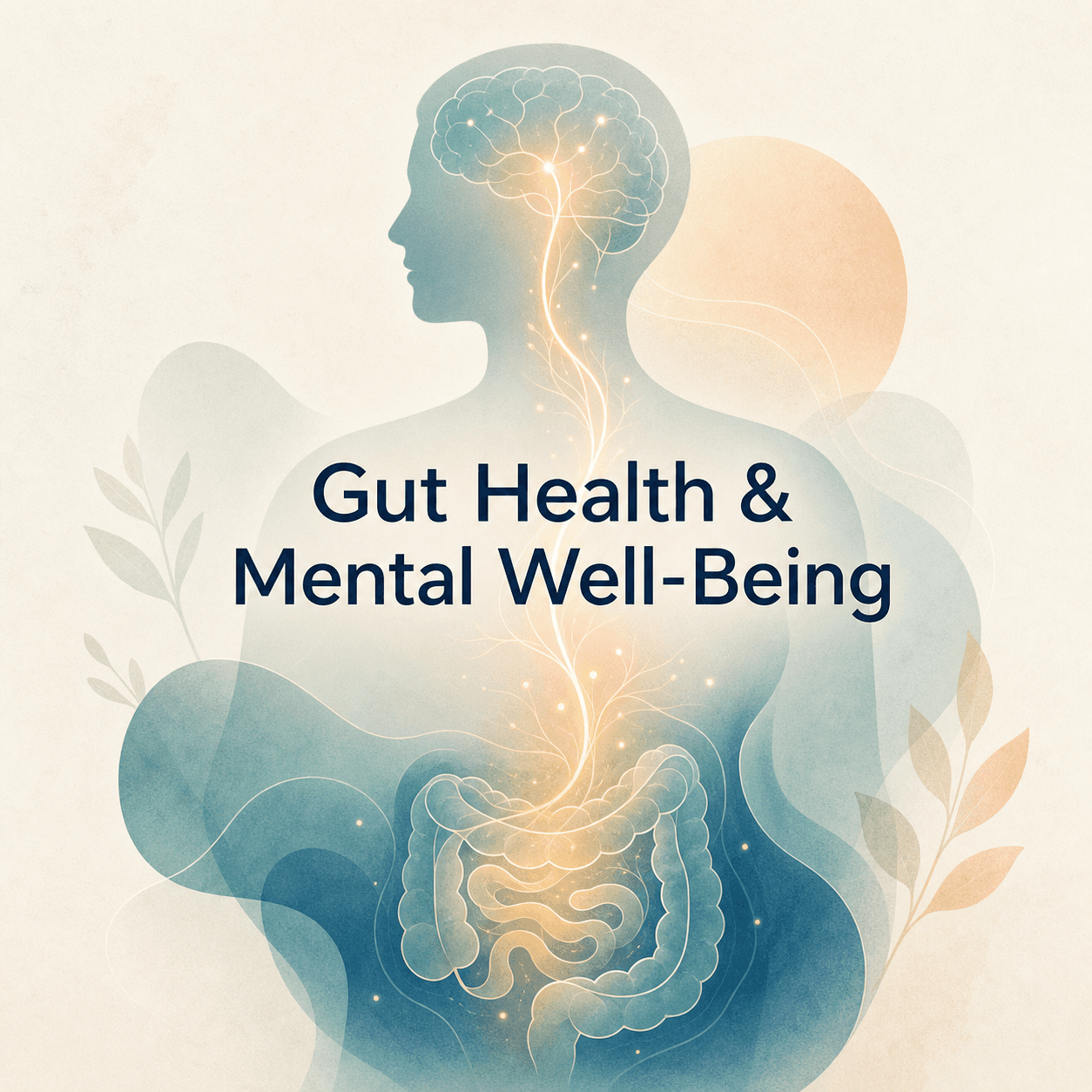
But the more you look into it, the more obvious it gets. The gut and the brain are in constant conversation. Not metaphorically. Literally. Nerves, hormones, immune signals, even little chemical messengers made by bacteria. It’s a whole system.
So let’s talk about what “gut health” actually means, how it connects to mental well being, and what you can do with that information without turning your kitchen into a supplement store.
What people mean when they say “gut health”
Gut health is one of those phrases that gets used for everything. Sometimes it means “I’m not bloated.” Sometimes it means “I drink kombucha.” Sometimes it means “I saw a TikTok about parasites.” So let’s ground it.
When researchers talk about gut health, they usually mean a few things working well together:
- A balanced gut microbiome: the community of bacteria, viruses, and fungi living in your digestive tract. Mostly bacteria get the spotlight.
- A strong gut lining: the intestinal barrier that decides what gets absorbed and what stays out.
- Good digestion and motility: how well you break down food and move it through.
- A calm, well regulated immune response: because a huge chunk of your immune system lives in and around your gut.
You can have one of these going fine and another one struggling. Like, you can poop daily but still have an inflamed gut lining or you can eat “clean” but be stressed and sleeping badly, and your gut reacts anyway.
And that brings us to the main point about the intricate relationship between gut health and mental wellbeing.
The gut brain axis is not a wellness buzzword
There is a real thing called the gut brain axis. It’s basically a two way communication network between your digestive system and your brain.
A few major pathways do the talking:
1. The vagus nerve
This is the big nerve highway connecting your brainstem to organs including your gut. It carries signals both ways. Your gut sends updates to your brain about what’s going on down there, and your brain sends instructions back about digestion, inflammation, and stress response.
This is part of why stress can cause stomach cramps. Or why you can feel nauseous when you’re anxious. The wiring is direct.
2. Neurotransmitters and chemical messengers
A lot of people have heard “most serotonin is made in the gut.” That statement gets thrown around, and it needs context, but it points to something real.
Your gut produces and uses many neurotransmitters and related compounds. Serotonin, GABA, dopamine precursors, short chain fatty acids like butyrate. Some are produced by your own cells, some influenced by microbes.
Now, does gut serotonin directly float into your brain and fix depression. No, not like that. The brain has its own serotonin system and the blood brain barrier is selective. But gut derived signals can still influence brain function through nerve pathways, immune signaling, and metabolites that affect inflammation and brain chemistry.
So the connection is not simplistic, but it is there.
3. Immune system and inflammation
This one is huge and it’s often the missing piece in mental health discussions.
Chronic inflammation is associated with mood issues in many people. Not always, not for everyone, but it shows up again and again in research.
If the gut barrier is irritated or permeable, more inflammatory compounds can pass through and the immune system can ramp up. This can lead to a low grade inflammatory state that affects the brain, sleep, and stress response.
Your gut is basically an immune organ with a digestive hobby.
4. The HPA axis and stress hormones
The HPA axis is your central stress response system. When you’re stressed, cortisol goes up. That changes digestion, changes gut permeability, shifts the microbiome, and can even change how sensitive you are to pain.
And then gut discomfort itself becomes a stressor. Which is fun, because it becomes a loop.
Stress affects the gut. The gut affects stress.
How gut issues can show up as mental symptoms
This part is tricky because we don’t want to reduce mental health to “just eat yogurt.” That’s not fair and it’s not accurate.
But there are patterns worth noticing.
Anxiety and that wired feeling
Some people feel anxious in a very physical way. Tight chest, racing thoughts, butterflies that feel more like bats. Gut imbalance can contribute, especially when inflammation is high or blood sugar is unstable.
Also, gut discomfort can teach your nervous system to stay on alert. If your body keeps sending “something is wrong” signals, your brain starts scanning for threats. Even if your life is fine.
Low mood and flatness
Again, not always, but gut inflammation and poor nutrient absorption can contribute to feeling low. If you’re not absorbing iron, B12, folate, magnesium, that can matter. If your sleep is wrecked by reflux or bloating, that can matter. If your diet is ultra processed and low in fiber, that can matter.
Sometimes the gut piece is not the only driver, but it is a driver.
Brain fog
Brain fog is a vague term, but people know it when they feel it. Slower thinking, difficulty focusing, memory feels slippery.
Inflammation, sleep disruption, and blood sugar swings can all contribute. So can certain food intolerances in some individuals. Also. Just chronic stress.
The gut can be part of that puzzle.
Irritability
This one is underrated. Not anxiety, not depression. Just snapping more easily. Feeling “over it” by noon. Gut discomfort, unstable energy, and poor sleep can all push you in that direction.
What the microbiome is doing behind the scenes
Your gut microbes help break down parts of food you cannot digest on your own, especially fibers. When they ferment fiber, they produce short chain fatty acids, including butyrate, which supports gut lining integrity and has anti inflammatory effects.
A diverse microbiome tends to be more resilient. Not because diversity is trendy. Because a broader ecosystem can handle change better. Travel, stress, antibiotics, random diet shifts, illness. A fragile microbiome gets knocked over easily.
Also, different microbes produce different metabolites. Some are beneficial. Some can be irritating. When the balance shifts, the signal your gut sends to the rest of your body changes too.
This is why two people can eat the same diet and feel different. Their internal ecosystems are not the same.
The “leaky gut” conversation, in plain language
“Leaky gut” is one of those phrases that makes doctors roll their eyes and wellness influencers lean in.
The scientific concept behind it is increased intestinal permeability. The gut lining is supposed to be selectively permeable. Absorb nutrients, keep out unwanted stuff. But stress, infections, certain medications, alcohol, chronic poor diet, and inflammation can affect that barrier.
When permeability increases, immune activation can increase too. That can contribute to systemic inflammation, which can influence the brain.
Is this the cause of all mental health problems? No. But is it a legitimate mechanism that can affect some people? Yes.
It’s best thought of as a volume knob, not an on-off switch.
What actually helps, without going extreme
This is the part where people want a magic list. The truth is annoying: small boring habits tend to win here.
1. Eat for microbes, not just macros
Your gut bacteria mostly thrive on fiber and plant compounds. In fact, a variety of plant foods across the week can significantly improve your gut health.
A simple target that helps many people: aim for a variety of plant foods across the week. Vegetables, fruit, beans, lentils, nuts, seeds, whole grains, herbs, spices. It doesn’t have to be perfect.
If you currently eat very little fiber, go slow. Suddenly doubling fiber can make you feel worse at first. Add it gradually and drink enough water.
Practical examples that are not dramatic:
- Add berries and chia to breakfast
- Put a handful of spinach into whatever you are cooking
- Swap one refined grain for a whole grain a few times a week
- Add beans to one meal
- Eat an apple with peanut butter instead of a snack bar
Not sexy. Works anyway.
2. Include fermented foods if you tolerate them
Fermented foods can introduce beneficial microbes and support diversity. Think:
- Yogurt with live cultures
- Kefir
- Sauerkraut or kimchi
- Miso
- Tempeh
If you have histamine issues or certain gut conditions, fermented foods can make symptoms worse. So this is not a universal rule. It’s a tool.
Also, kombucha is fine, but it’s not medicine. Watch the sugar.
3. Don’t ignore protein and healthy fats
Blood sugar stability matters for mood. Meals that are mostly carbs without enough protein or fat can lead to spikes and crashes. That can feel like anxiety for some people. Or irritability. Or fatigue that turns into doom scrolling.
A steadier plate often looks like:
- Protein
- Fiber rich carbs
- Colorful plants
- Some healthy fat
Again, boring. Effective.
4. Sleep is gut health
Sleep deprivation changes the microbiome. It also increases stress hormones and inflammation. If you want better mental well being, sleep is not optional.
A few basic levers:
- Consistent wake time most days
- Morning light exposure
- Caffeine cutoff, ideally 8 hours before bedtime
- Cooler darker room
- A wind down routine that is not your phone inches from your face
If your gut symptoms wake you up, that is also a signal worth taking seriously.
5. Stress management is gut management
This is where people groan, because “reduce stress” is not a strategy. But you can reduce the stress load on your nervous system in small ways.
Things that often help, because they shift your physiology:
- A daily walk, especially after meals
- Slow breathing for 3 to 5 minutes
- Yoga or stretching
- Social connection that feels safe
- Therapy, if that is accessible
- Fewer meals eaten while rushing or working
Digestion works better when your nervous system is out of fight or flight. You do not need to be zen. You just need more moments of downshift.
6. Be cautious with antibiotics and over sanitizing
Antibiotics can be life saving. Sometimes you need them. But they can also disrupt the microbiome. If you do take them, it is worth talking with a clinician about gut support after.
Also, you do not need to nuke your environment with antibacterial everything. Regular hygiene is enough for most people.
7. Consider targeted supplements, but only after basics
Supplements can help in specific situations, but the order matters.
A few that come up often:
- Probiotics: Can help some people, can do nothing for others, can worsen symptoms for a few. Strain matters. Condition matters.
- Prebiotics: Feed good bacteria, but can cause gas and bloating if introduced too fast.
- Magnesium glycinate: Sometimes helpful for sleep and stress, but not a gut cure.
- Omega 3s: Can support inflammation balance.
- Fiber supplements: Psyllium can help bowel regularity and sometimes cholesterol, but it is still best to get fiber from food when possible.
If you have significant anxiety or depression, it’s worth involving a professional before experimenting heavily. Not because supplements are scary, but because you want a plan, not a pile of powders.
When gut problems are a sign you should get help
Some gut symptoms are not “just stress” or “just probiotics.”
Talk to a healthcare professional if you have:
- Unexplained weight loss
- Blood in stool
- Persistent diarrhea or constipation that is new for you
- Severe abdominal pain
- Ongoing reflux despite basic changes
- Symptoms that wake you up regularly
- A history of eating disorders, because gut interventions can accidentally trigger restriction patterns
Also, if your mental health symptoms are severe, persistent, or include thoughts of self harm, get professional support immediately. The gut can be part of the picture, but you deserve full care, not a diet only solution.
A realistic way to think about the gut mind connection
Here’s the framing that feels most honest.
Your gut is not the boss of your brain. And your brain is not the boss of your gut. They are partners, sometimes cooperative, sometimes chaotic, always connected.
If your gut is inflamed, under fed, over stressed, or constantly irritated, your mental well being has to work harder. If your mind is constantly stressed, your gut has to work harder.
So improving gut health can support mental health. It can make the ground steadier. But it is not a replacement for therapy, medication, community, purpose, and all the other stuff that also matters.
If you want a simple starting point that is not overwhelming, do this for two weeks:
- Add one extra plant food per day
- Eat protein at breakfast or lunch
- Take a 10 minute walk most days
- Pick a caffeine cutoff time
- Do 3 minutes of slow breathing before one meal
Small. Almost annoyingly small.
And then notice. Your digestion, yes. But also your mood, your patience, your sleep, your baseline anxiety.
Because sometimes the first sign your gut is healing is not in the bathroom.
It’s in your head.
FAQs (Frequently Asked Questions)
What does ‘gut health’ really mean?
Gut health refers to several factors working well together: a balanced gut microbiome (the community of bacteria, viruses, and fungi in your digestive tract), a strong gut lining that controls absorption, good digestion and motility, and a calm, well-regulated immune response. It’s more than just avoiding bloating or eating certain foods; it’s about the overall function and balance of your digestive system.
How is the gut connected to mental health?
The gut and brain communicate through the gut-brain axis, which includes the vagus nerve, neurotransmitters produced in the gut like serotonin and GABA, immune system signaling, and stress hormone pathways. This two-way communication means your gut health can influence mood, anxiety levels, and overall mental well-being.
What is the gut-brain axis?
The gut-brain axis is a complex communication network between your digestive system and your brain. It involves nerve signals via the vagus nerve, chemical messengers like neurotransmitters produced in the gut, immune responses including inflammation, and stress hormone regulation through the HPA axis. This connection explains why stress can affect digestion and why gut issues can impact mental health.
Can poor gut health cause anxiety or mood changes?
Yes, poor gut health can contribute to anxiety and mood changes. Gut imbalances can increase inflammation or disrupt nutrient absorption (like iron or B vitamins), which affects brain chemistry. Chronic inflammation from a leaky gut lining may lead to low-grade inflammatory states impacting sleep, stress response, and mood stability.
How does stress affect the gut?
Stress activates the HPA axis causing cortisol release which alters digestion, increases gut permeability (making it ‘leaky’), shifts microbiome composition, and heightens pain sensitivity. This creates a feedback loop where stress worsens gut discomfort, which in turn becomes a new source of stress for the body.
What practical steps can I take to support my gut health for better mental well-being?
Focus on a balanced diet rich in fiber and real meals instead of processed takeout; avoid over-reliance on coffee; manage stress through mindfulness or relaxation techniques; ensure good sleep hygiene; and consider foods that support a healthy microbiome like fermented foods. Avoid turning your kitchen into a supplement store—small lifestyle changes often yield meaningful benefits for both gut health and mood.