









Nobody starts a small business because they love spreadsheets and expense audits. But here we are.
In 2026, cost cutting looks different than it did even two years ago. It is less about panic firing people or slashing everything that feels optional. It is more tactical now. Quieter. More like. We are going to redesign how this work happens so it costs less forever.
And honestly, some of the smartest savings I am seeing right now are not dramatic at all. They are small switches that stack. A tool swap. A process change. A new vendor term. One less meeting. One less piece of software that everybody “kind of” uses.
This is a list of what small companies are actually doing. Not theory. Not corporate stuff. The real moves.
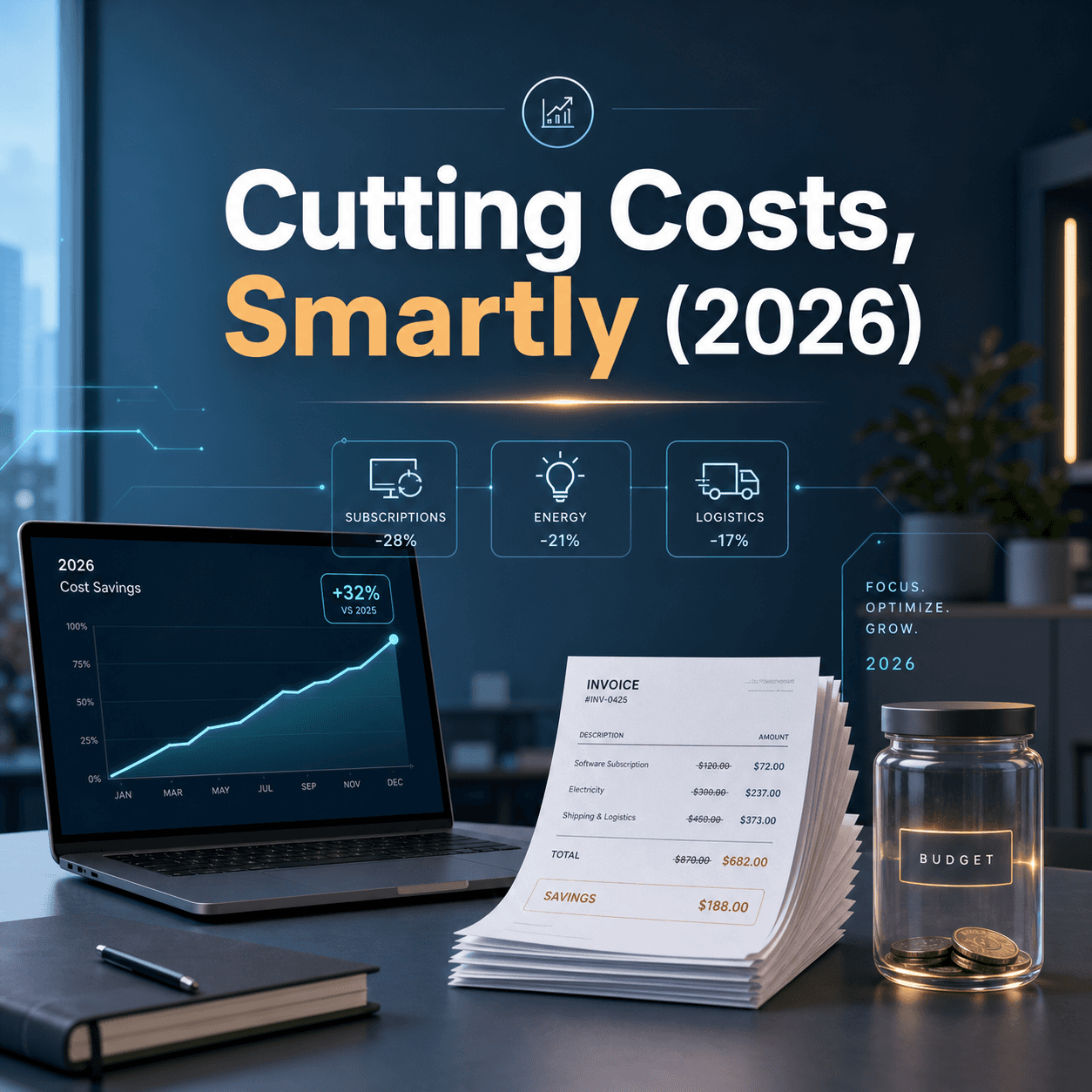
1. They are treating “software sprawl” like a leak, not a convenience
Most small companies in 2026 are paying for too many tools. Not because they are careless. It just happens.
Someone signs up for a design tool. Then the marketing person buys an AI tool. Then the founder pays for a CRM. Then finance adds a subscription to “make invoicing easier”. Then you have. 38 monthly charges.
The smart companies are doing a hard reset, usually every quarter:
- Pull the last 90 days of transactions.
- Categorize every recurring charge.
- Ask one question per tool: does it replace people, or does it replace other tools?
If it does neither, it goes.
A lot of teams are shocked when they realize they are paying for:
- Two project management tools at once.
- Three meeting note tools.
- Separate email marketing, SMS, landing page, and forms tools when one platform could do 80 percent of it.
The best trick here is boring but effective. Consolidate around fewer vendors. Even if the replacement is slightly worse in one feature, the savings come from simplicity. Less training. Less switching. Less duplication.
Also, vendors in 2026 are way more open to negotiation than people think. If you are a small company, ask for:
- Annual pricing on a monthly contract.
- Seat reductions without penalties.
- Startup or SMB plans that are not advertised.
If you do nothing else this month, do this audit. It is one of the fastest cost cuts with almost no downside.
2. They are using AI for the unsexy work, not the flashy work
A lot of companies tried AI for “write our blog posts” or “make our ads”. And sure, that can help. But the real savings in 2026 are coming from using AI on the tasks that quietly burn payroll.
Stuff like:
- First drafts of client emails.
- Summarizing long customer calls.
- Turning messy meeting notes into action lists.
- Writing internal SOPs from bullet points.
- Drafting job descriptions, policies, and templates.
This reduces time. And time is the expensive thing.
The teams doing it well are not asking AI to replace their brain. They are asking it to remove the blank page. Or remove the repetitive parts. Then a human edits.
It ends up looking like:
- Human provides context and constraints.
- AI generates a draft quickly.
- Human tightens, checks, and sends.
Also, smart companies are centralizing AI usage instead of letting everyone expensing random tools. They pick one or two models and standardize prompts. That alone cuts waste.
One more thing. The best ROI is when AI is plugged into workflows, not used like a toy. For example, every support ticket gets summarized and categorized automatically, then routed. That kind of thing.
3. They are cutting meetings in a way that does not destroy culture
You can cut meeting time without turning the company into a lonely remote factory. The companies doing this well are not just canceling everything. They are changing the default.
In 2026, the smart shift is:
- Meetings are for decisions and conflict resolution.
- Updates happen asynchronously.
That means weekly status meetings shrink or disappear, replaced by a simple written update format. Something like:
- What I shipped
- What is blocked
- What I need from someone else
- What I am doing next
And then one short live meeting per week for the stuff that actually needs discussion.
Another quiet win: “No meeting Wednesdays” is becoming common again, but this time with rules. Real rules. Like. No internal calls unless something is on fire.
You will not believe how much cost this cuts once you do the math. If five people are in a one hour meeting, that is five hours of paid time. Multiply that by 10 meetings a week and it gets stupid fast.
4. They are hiring differently, not just hiring less
The smartest small companies are not freezing hiring across the board. They are being specific about what kind of labor they buy.
The big move in 2026 is more fractional talent.
Instead of hiring a full time:
- CFO
- Legal counsel
- Head of HR
- Paid media manager
- Data analyst
They hire fractional. Or part time. Or project based.
And yes, this can backfire if you pick the wrong person. But when it works, it gives you senior level skill without the full salary and benefits load.
There is also a shift toward outcome based contracts. Pay for deliverables, not for hours. Especially for roles like design, content, and certain types of ops work.
A surprising number of small companies are also simplifying roles so they can hire one strong generalist instead of two narrow specialists. Not always possible. But in early stages, it is often the smarter choice.
5. They are renegotiating everything like it is normal (because it is)
In 2026, vendors expect negotiation. The economy has been weird for long enough that “list price” is basically a suggestion.
Small companies are renegotiating:
- Office leases.
- Insurance.
- Payment processing rates.
- Shipping rates.
- SaaS contracts.
- Freelance retainers.
- Even terms with manufacturers and wholesalers.
The trick is to show you are willing to switch. Not aggressively. Just calmly.
A simple email like:
We are reviewing costs this quarter. We like working with you, but we need to get this closer to X. Is there a way to adjust pricing or switch to a plan that fits?
You would be amazed how often the answer is yes.
And if the answer is no, you now have information. You can shop alternatives with confidence.
Also. Ask for longer payment terms where possible. Net 30 to net 45 or net 60 can reduce cash pressure without changing your total cost. Cash flow is its own kind of savings.
6. They are shrinking office costs without going fully remote
The “remote vs office” debate is tired. In 2026 most small companies are landing in the middle.
The cost cutting winners are doing hybrid with intention, not chaos.
Some common setups:
- Smaller office footprint, used mostly for collaboration days.
- Coworking memberships for key people instead of a lease.
- Office only in one city, remote everywhere else.
- “Office on demand” meeting spaces rented for planning sessions.
And then they cut the hidden costs:
- Cleaning and maintenance contracts that are overpriced.
- Business internet plans that are too large for current usage.
- Fancy snacks and perks that no one really cares about anymore.
A funny pattern. People will forgive less free sparkling water if you give them more flexibility and clearer communication.
7. They are optimizing payment processing and finance ops
This one is not sexy, but it is real money.
Companies are reducing costs by:
- Auditing payment processor fees and negotiating rates.
- Routing more customers to ACH or bank transfer for large invoices.
- Adding surcharges carefully where legal and appropriate.
- Switching invoicing to reduce late payments.
- Tightening collections with friendly but consistent follow ups.
Also, they are automating basic bookkeeping. Not to fire the accountant. But to reduce the number of billable hours spent categorizing transactions and fixing messy records.
In 2026, “finance ops hygiene” is a competitive advantage for small businesses. Not because it is fun. Because it prevents slow leaks and surprise crises.
8. They are reducing customer acquisition waste, not just spending less on marketing
A lot of small companies cut marketing spend first when things get tight. That is usually a mistake. The smarter approach is cutting waste inside marketing.
Here is what that looks like in 2026:
They focus on channels that compound
Instead of chasing whatever is trending, they invest in:
- SEO that targets bottom of funnel keywords.
- Email lists they actually own.
- Partnerships and affiliates.
- Content that is reused across formats.
They stop paying for “maybe” audiences
If your ads are going to broad targeting and hoping the algorithm finds buyers, you are basically paying for learning.
Smart teams narrow the message and the audience, improve the offer, and clean up landing pages before they raise spend.
They improve conversion rate before increasing traffic
If your site converts at 1 percent and you improve it to 2 percent, you just doubled revenue from the same spend.
In 2026, small companies are doing simple CRO work:
- Shorter forms.
- Clearer pricing.
- Better FAQs.
- Stronger testimonials.
- Faster pages.
This is cost cutting too. It reduces the cost per customer without killing growth.
9. They are using fewer agencies and more modular help
Agencies can be great. But a lot of small companies in 2026 are realizing they do not need a full service retainer.
So they switch to modular support:
- One freelance strategist who sets direction.
- A contractor who executes specific pieces.
- Internal generalist who coordinates.
Or they buy one time projects instead of ongoing retainers. Like a landing page overhaul. A brand refresh. A tracking setup.
This lowers monthly fixed costs and keeps flexibility. Which matters a lot when revenue is bumpy.
10. They are standardizing processes so work stops getting redone
Rework is expensive. It is also invisible until you look.
Small companies save money when they stop reinventing the same task every time.
In 2026, I see a lot more lightweight operations documentation. Not corporate binders. Just practical stuff like:
- How we onboard a client.
- How we publish a blog post.
- How we respond to refunds.
- How we launch a new feature.
- What “done” means for a design request.
The win is not only speed. It is fewer mistakes, fewer handoffs, fewer “wait what are we doing” conversations.
And this is where AI helps again. You can literally record a process once, dump rough notes into an assistant, and have it produce a clean SOP that you tweak.
11. They are cutting inventory and supply chain costs with smaller bets
For product based businesses, 2026 has been all about reducing cash trapped in inventory.
The smart moves:
- Smaller production runs more often, even if unit cost is slightly higher.
- Testing demand with preorders or waitlists.
- Tightening SKUs, fewer variants, fewer slow movers.
- Renegotiating freight and packaging, especially dimensional weight issues.
- Using local or regional suppliers when global shipping risk is high.
This is not just cost cutting. It is risk cutting. The businesses that survive weird demand swings are the ones that do not overbuy.
12. They are fixing churn before they chase more sales
This is one of those things that feels obvious but gets ignored.
If you are losing customers quickly, you are paying to replace them constantly. That is expensive.
In 2026, smart small companies are putting real effort into retention:
- Better onboarding.
- Clearer “first win” moments.
- Proactive support.
- Simple check in emails that catch problems early.
- Loyalty offers or annual plans.
Even small churn improvements can reduce acquisition pressure. Which reduces spend. Which reduces stress.
Also, retention work tends to create better reviews and referrals. That is the cheapest marketing there is.
13. They are upgrading equipment strategically, not delaying forever
Some companies try to save money by never upgrading hardware. Old laptops. Old phones. Slow systems. It feels frugal.
It is not.
In 2026, the cost of lost productivity often exceeds the cost of a reasonable upgrade schedule. The smarter companies do planned refresh cycles. They standardize devices. They avoid constant troubleshooting.
Same with tools that reduce manual work. A small automation that saves two hours per week across a team pays for itself quickly.
The key is being selective. Upgrade what blocks work. Do not upgrade for vibes.
14. They are changing benefits and perks without making people miserable
This is delicate, obviously. Cut perks the wrong way and you lose your best people, which is the most expensive thing you can do.
Smart companies in 2026 are adjusting perks based on what employees actually value.
Some patterns:
- Swapping expensive fringe perks for simple stipends people can use.
- Offering flexible schedules as a “benefit” that costs nothing.
- Trimming unused perks, like memberships no one claims.
- Focusing on a few meaningful benefits instead of a long list of tiny ones.
And when they do cut something, they explain it like adults. Transparent. Calm. No weird corporate language.
People can handle reality. They cannot handle feeling lied to.
15. They are simplifying the product or service offering
This is the sneaky one. And it is powerful.
Small companies often carry too many offers:
- Too many service packages.
- Too many pricing tiers.
- Too many custom options.
- Too many edge case features.
Every extra option adds operational cost. More support. More training. More exceptions. More mistakes.
In 2026, the leaner companies are trimming the menu.
They keep:
- The most profitable offers.
- The easiest to deliver offers.
- The offers that lead to upsells.
They drop the stuff that creates chaos, even if a few customers complain.
And the wild part is. Simplifying often increases revenue. People choose faster when there are fewer options.
A quick checklist you can steal (seriously, copy it)
If you want to cut costs without breaking the company, run through this list:
- Audit every subscription and cancel duplicates.
- Consolidate AI tools and standardize usage.
- Replace weekly update meetings with async updates.
- Shift some roles to fractional or project based.
- Renegotiate your biggest 5 vendors this quarter.
- Reduce office footprint or switch to flexible space.
- Lower payment processing fees and push ACH for big invoices.
- Improve conversion rate before you spend more on ads.
- Replace agency retainers with modular contractors.
- Document repeatable processes to reduce rework.
- Reduce inventory risk with smaller runs and SKU cleanup.
- Fix churn with better onboarding and proactive support.
- Upgrade bottleneck hardware and automate repetitive admin.
- Trim perks carefully, focus on what people actually use.
- Simplify your offer set so delivery stops being messy.
Let’s wrap this up
Cost cutting in 2026 is not about being cheap. It is about being deliberate.
The small companies doing best right now are cutting costs in ways that make them stronger. Less complexity. Less rework. Less waste. More focus. More clarity.
And if you are overwhelmed, start with the easiest win.
Do the subscription audit. Then pick one other area. Meetings, vendor negotiation, churn, whatever hurts most. You do not need a dramatic overhaul. You just need a few smart changes that keep paying you back every month.
FAQs (Frequently Asked Questions)
How are small businesses tackling software sprawl to cut costs in 2026?
Small businesses in 2026 treat software sprawl like a leak by conducting quarterly audits of their subscriptions. They pull the last 90 days of transactions, categorize recurring charges, and assess each tool’s value—specifically if it replaces people or other tools. Tools that don’t add clear value are eliminated. Consolidating vendors simplifies training and reduces duplication, leading to significant cost savings. Additionally, businesses negotiate better terms such as annual pricing on monthly contracts and seat reductions without penalties.
What is the most effective way small companies are using AI to save money?
Instead of using AI for flashy tasks like writing blog posts or ads, smart companies use AI for unsexy but payroll-heavy work such as drafting client emails, summarizing customer calls, converting messy meeting notes into action lists, and creating internal SOPs from bullet points. This approach removes repetitive tasks and blank pages, with humans providing context and editing drafts. Centralizing AI usage around one or two models with standardized prompts further cuts waste. Integrating AI directly into workflows—for example, automatically categorizing support tickets—is where the best ROI lies.
How can small businesses reduce meeting time without harming company culture?
In 2026, effective companies cut meetings by changing defaults rather than canceling all gatherings. Meetings are reserved strictly for decisions and conflict resolution, while updates happen asynchronously through written formats outlining shipped work, blockers, requests, and upcoming tasks. A single short live meeting per week addresses discussion needs. Initiatives like ‘No Meeting Wednesdays’ with strict rules (e.g., no internal calls unless urgent) also help reduce paid time wasted in meetings without turning the workplace into a disconnected environment.
What hiring strategies are smart small businesses adopting instead of freezing hiring?
Rather than blanket hiring freezes, savvy small businesses in 2026 focus on buying specific kinds of labor through fractional talent—hiring part-time CFOs, legal counsel, HR heads, paid media managers, or data analysts. Outcome-based contracts paying for deliverables instead of hours are increasingly common for roles like design and content creation. Simplifying roles to hire strong generalists instead of multiple specialists is another trend that helps early-stage companies reduce salary and benefits expenses while maintaining capability.
Why is renegotiating vendor contracts important for small companies aiming to cut costs?
Renegotiating vendor contracts allows small companies to secure more favorable terms such as annual pricing on monthly contracts or seat reductions without penalties—options often available but not advertised. Vendors in 2026 tend to be more open to negotiation than many expect. This proactive approach helps reduce recurring subscription expenses significantly with minimal downside risk.
What are some simple but impactful cost-cutting moves small businesses are making in 2026?
Small but impactful cost-cutting moves include swapping tools to consolidate functions under fewer vendors even if some features are slightly compromised; reducing unnecessary meetings; eliminating rarely used software subscriptions; centralizing AI tools instead of multiple random ones; shifting routine tasks to AI-assisted workflows; adopting fractional talent instead of full-time hires; and renegotiating vendor terms regularly. These tactical changes stack up over time to create lasting savings without drastic measures like mass layoffs.